
Video recipe
Cantonese Crispy Pork Belly (Siu Yuk)
Crackly. Juicy. Savory bliss.
Adapted from Made With Lau
Every step links back to that moment in the video
Cantonese crispy pork belly, known as Siu Yuk, is a crown jewel of roast meat shops—prized for its shattering, blistered golden crackling over succulent, five-layered pork belly. Daddy Lau's home method skips commercial roasting pits in favor of smart preparation: briefly parboiling the skin to soften it for dense toothpick pricking, drawing out surface moisture with a 5-minute salt rest before scraping it clean, brushing with white rice vinegar to air-dry overnight in the fridge, and roasting in two temperature stages in a countertop toaster oven.
Estimated timing — actual time may vary with cooking speed and heat.
What makes this version work
Parboiling skin-side down for 1 minute softens the rind so paired toothpicks can pierce dense holes for blistering.
Scoring the meat one-third deep in a grid lets the five-spice dry rub and savory bean paste penetrate deeply.
Salting the skin for 5 minutes draws out moisture before scraping clean, brushing with white vinegar, and air-drying overnight.
Wrapping the meat in a foil box over a water-filled drip pan cooks the pork gently at 375°F before blistering the skin at 425°F.
Ingredients
Tap to check off — your progress is saved
Pork Belly & Water
- Skin-on Pork Belly 1200gapprox. 2 lb 10 oz (42 oz); choose a slab with thick skin and five distinct layers of fat and lean meat
- Water (for parboiling) 480ml2 cups, boiled in a wok to parboil the skin and meat
- Water (for roasting pan) 120ml1/2 cup, poured into the bottom baking pan to prevent scorching
Meat-Side Dry Spice Rub
- Five-Spice Powder 0.5茶匙adds classic Cantonese roast aroma; optional if you prefer without
- Black Pepper 0.33茶匙1/3 tsp
- White Pepper 0.25茶匙1/4 tsp
- Garlic Salt 1茶匙
- Salt 0.5茶匙
Meat-Side Savory Paste
- Ground Bean Sauce 2茶匙Daddy Lau's savory secret; apply after the dry rub rather than mixing together (optional)
- Sugar 1茶匙mixed with the ground bean sauce before rubbing onto the meat
Crispy Skin Treatment
- Salt (for drawing skin moisture) 1湯匙spread on the skin for 5 minutes to draw out moisture, then scraped off completely
- White Rice Vinegar 1茶匙brushed over the scraped skin to cut grease and promote blistering
Equipment
- Toaster Oven, Regular Oven, or Air Fryer (with baking pan and wire rack)
- Large Wok or Wide Pot
- Chinese Cleaver
- Toothpicks (or Meat Tenderizer Pricker / Fork)
- Aluminum Foil and Paper Towels
- Instant-Read Meat Thermometer (Optional)
Steps
Parboil the Pork Belly Skin-Side Down to Soften the Rind
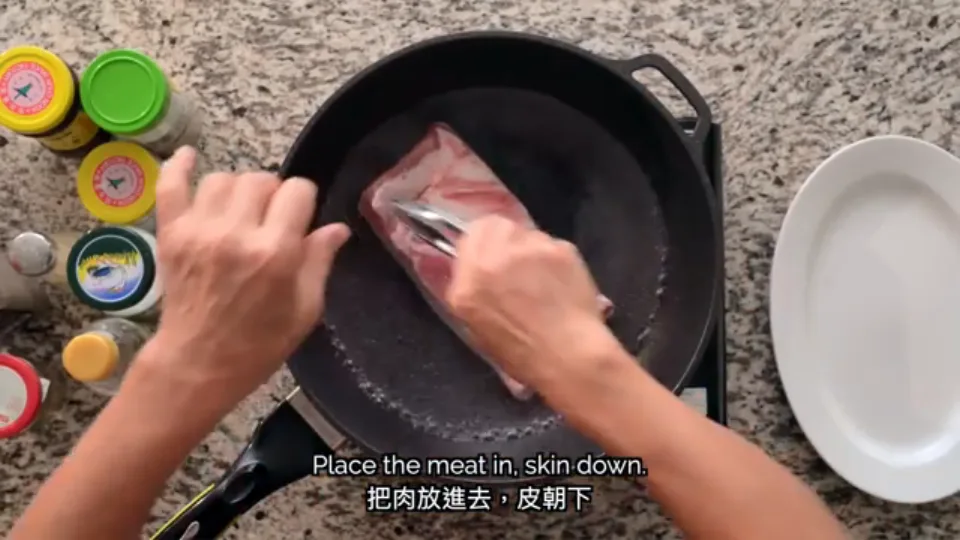 Time 5 minHeat High Heat
Pour 2 cups of water into a large wok and bring to a boil over high heat. Place the pork belly in skin-side down, nudging it slightly, and boil on high heat for 1 minute until the skin softens. Flip the pork belly over and cook the meat side for 30 seconds, then remove from the wok.
How to tellThe pork skin turns slightly translucent and pliable, while the outer meat firms upWatch at 0:56Cool in Cold Water, Scrape the Skin Clean, and Pat Dry
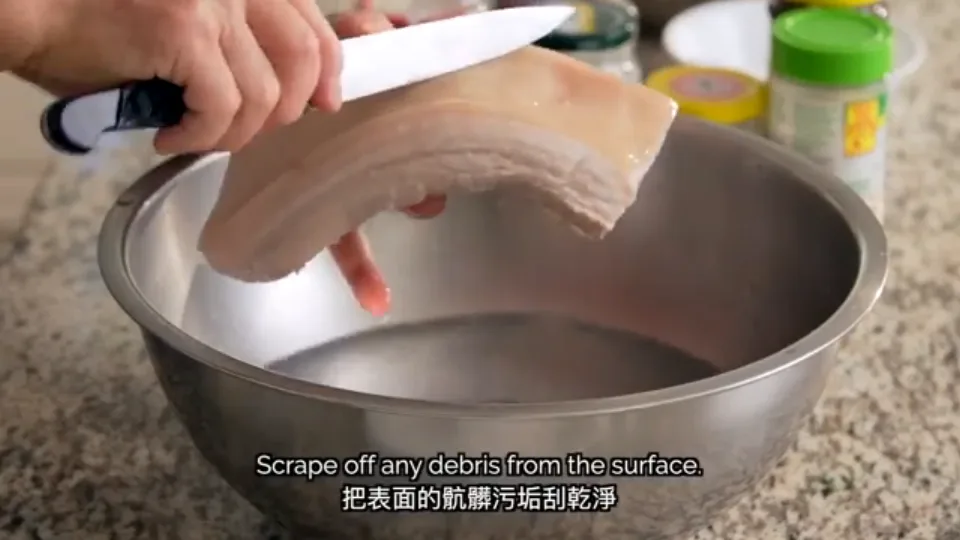 Time 5 min
Submerge the parboiled pork belly in cold water to cool rapidly. Hold a cleaver blade perpendicular to the skin and scrape back and forth to remove any fine hairs and surface impurities. Rinse clean, lift out, and pat thoroughly dry on all sides with paper towels.
How to tellGrayish residue comes off on the blade, leaving the skin clean, smooth, and dryWatch at 2:00Prick Dense Holes Across the Entire Pork Skin
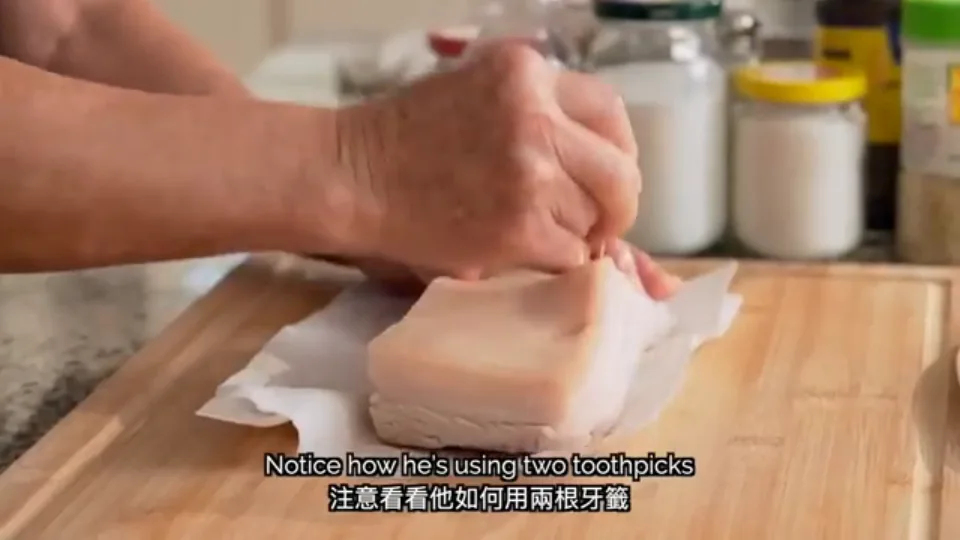 Time 10 min
Hold two toothpicks together (or use a fork or steel meat pricker) and poke holes densely across the entire pork skin. Pierce just deep enough to puncture through the skin layer without stabbing deep into the meat—the denser the holes, the better the skin will absorb vinegar and blister into crispy bubbles.
How to tellThe entire skin surface is covered in tightly packed pinpricksCommon mistakeIf the holes are too sparse, the skin will bake up hard and tough instead of puffing into light blistersWatch at 3:11Flip and Score the Meat Side in a Crosshatch Grid
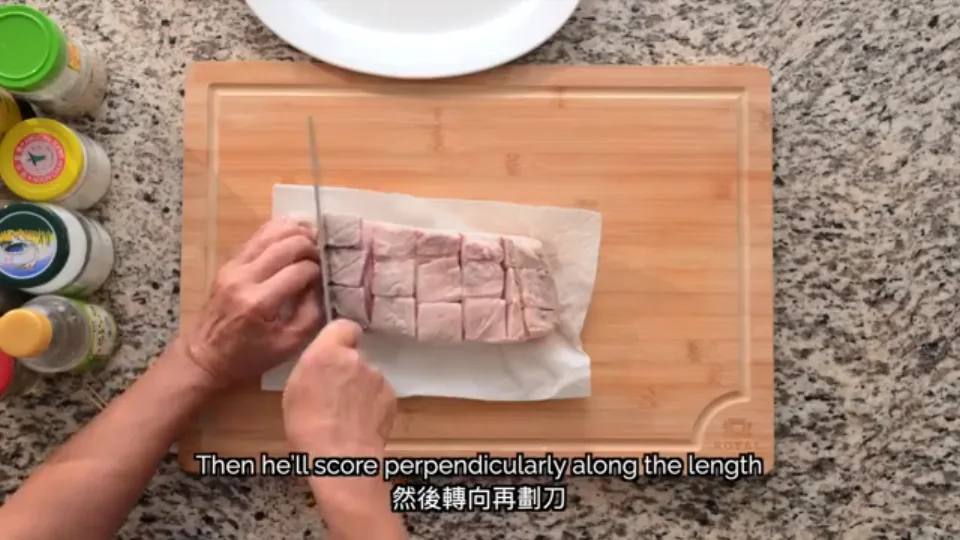 Time 3 min
Flip the pork belly meat-side up. Make three lengthwise cuts about one-third of the way deep into the meat, then rotate 90 degrees and make crosswise cuts to form a grid of squares. Scoring helps the seasoning penetrate deep into the thick meat and serves as slicing guides after roasting.
How to tellNeat square grid cuts about one-third deep into the flesh, leaving the bottom fat and skin intactCommon mistakeDo not cut deeper than one-third of the meat's thicknessWatch at 3:53Mix the Five-Spice Dry Rub and Massage into the Meat Crevices
 Time 3 min
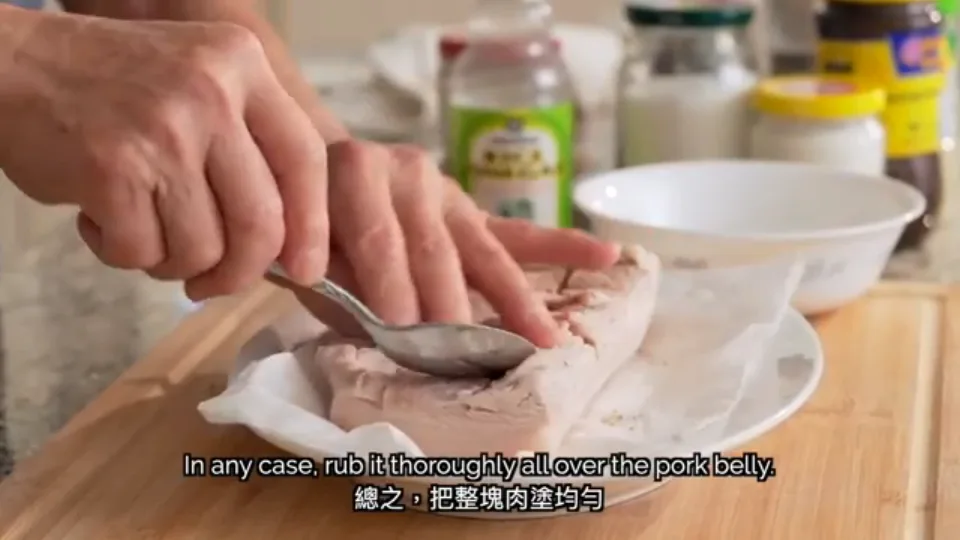
In a small bowl, stir together 1/2 teaspoon five-spice powder, 1/3 teaspoon black pepper, 1/4 teaspoon white pepper, 1 teaspoon garlic salt, and 1/2 teaspoon salt. Spoon the dry rub over the meat side and rub it thoroughly across the surface and inside every scored crevice.
How to tellEvery square and crevice on the meat side is evenly coated with spice rub, while the skin remains cleanCommon mistakeApply spices only to the meat side—keep the pork skin free of dark spices so it doesn't burnWatch at 5:43Blend Ground Bean Sauce with Sugar and Rub Over the Meat
 Time 3 min
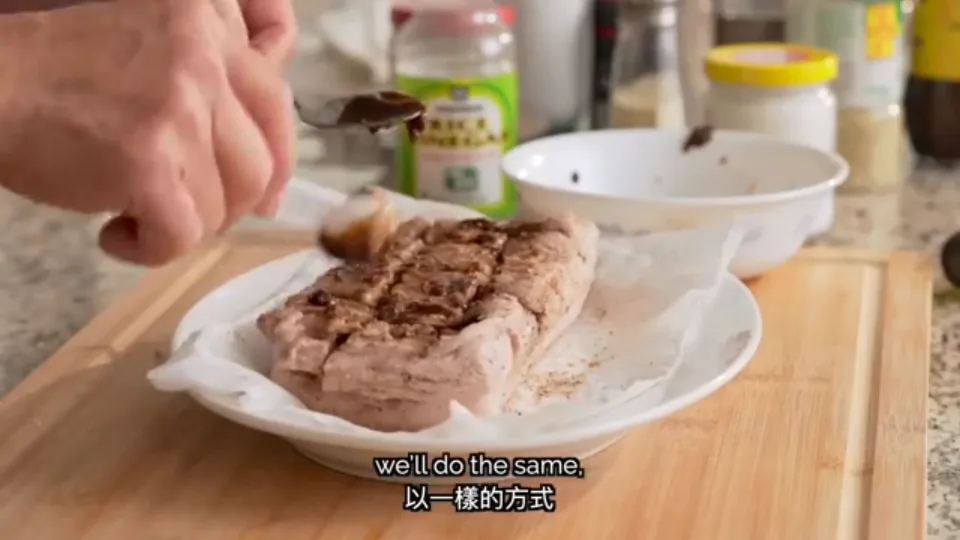
In a separate small bowl, mix 2 teaspoons of ground bean sauce with 1 teaspoon of sugar. Spread and rub this savory paste evenly over the spiced meat surface and into the scored cuts. Apply the dry rub and wet paste in two separate steps rather than mixing them together beforehand.
How to tellA glossy amber layer of bean paste coats the meat surface and crevicesWatch at 6:09Fold Aluminum Foil into a Snug Box Around the Pork Belly
 Time 3 min
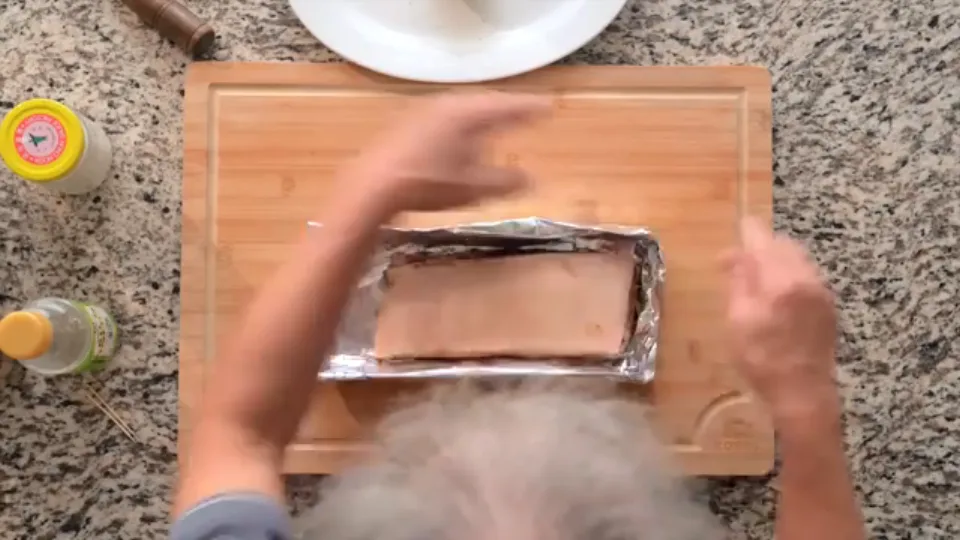
Tear a sheet of aluminum foil larger than the pork belly and place the meat in the center, skin-side up. Fold all four sides of the foil tightly up against the edges of the meat to form a snug open-top box, leaving only the skin exposed. This foil barrier shields the seasoned meat from scorching and traps juices inside.
How to tellThe foil walls hug the four sides of the pork belly snugly with the top skin fully exposedWatch at 6:52Cover the Skin with Salt for 5 Minutes to Draw Out Moisture, Then Scrape Off
 Time 7 min
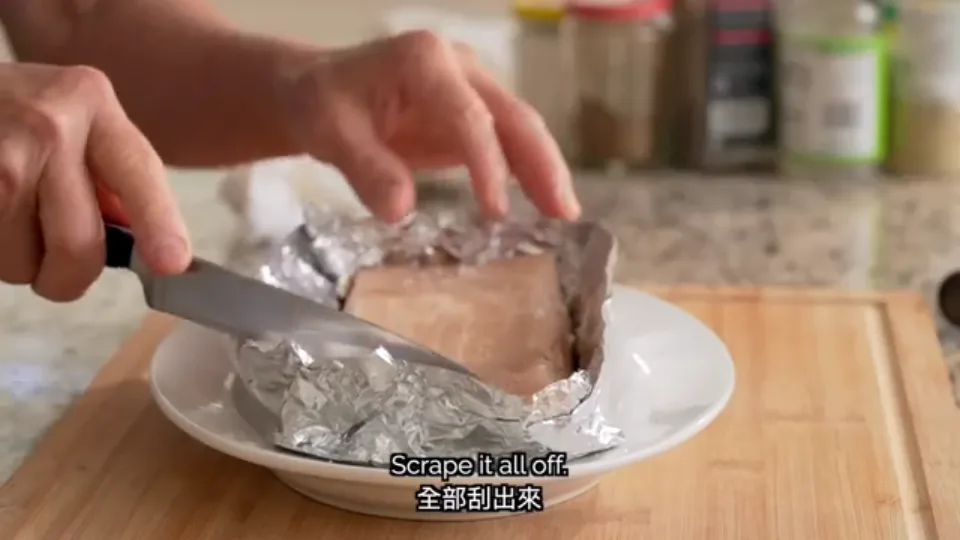
Sprinkle 1 tablespoon of salt evenly across the exposed pork skin and let it sit for 5 minutes. The salt will quickly draw moisture out from the skin and turn damp. After 5 minutes, use the flat edge of a cleaver blade to scrape off all the wet salt completely.
How to tellMoisture beads visibly wet the salt layer within 5 minutes, and scraping leaves the skin clean and salt-freeCommon mistakeScrape off all the wet salt thoroughly so the finished crackling isn't overly saltyWatch at 8:01Brush White Rice Vinegar on the Skin and Air-Dry in the Fridge Overnight
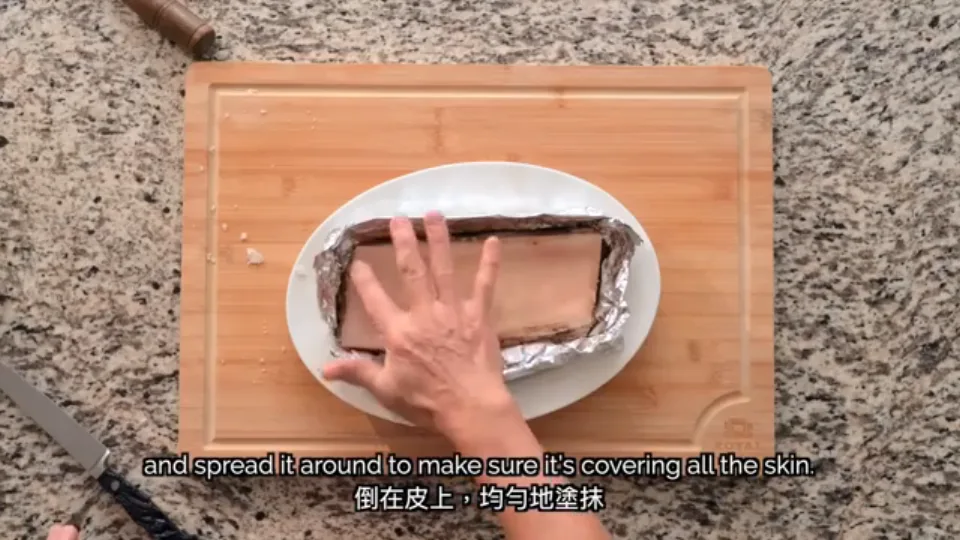 Time 6 min
Pour 1 teaspoon of white rice vinegar onto the scraped skin and rub it evenly across the surface; the vinegar cuts surface oil and helps the skin blister. Place the foil-wrapped pork belly uncovered on the top shelf of the refrigerator—right near the air vent where airflow is strongest—to chill and air-dry for 10 to 12 hours overnight.
How to tellAfter chilling overnight, the pork skin feels completely dry, taut, and firm to the touchCommon mistakeLeave the pork completely uncovered in the fridge so the cold air can dry out the skinWatch at 8:18Add Water to the Roasting Pan and Roast at 375°F to Cook the Meat
 Time 25 minHeat 375°F (190°C)
Remove the dried pork belly from the fridge and preheat the toaster oven to 400°F (205°C). Pour 1/2 cup of water into the bottom baking pan, set a wire rack on top, and place the foil-wrapped pork on the rack to prevent the bottom from burning. Once preheated, lower the temperature to 375°F (190°C), place the tray inside, and roast for 20 to 25 minutes to cook the meat through.
How to tellThe foil-wrapped pork sits elevated on the wire rack over water as the meat cooks gentlyCommon mistakeIf using a full-size conventional oven, reduce temperatures by about 25°F since large ovens radiate stronger heatWatch at 11:06Raise to 425°F to Blister the Skin, Then Rest 1 Hour Before Slicing
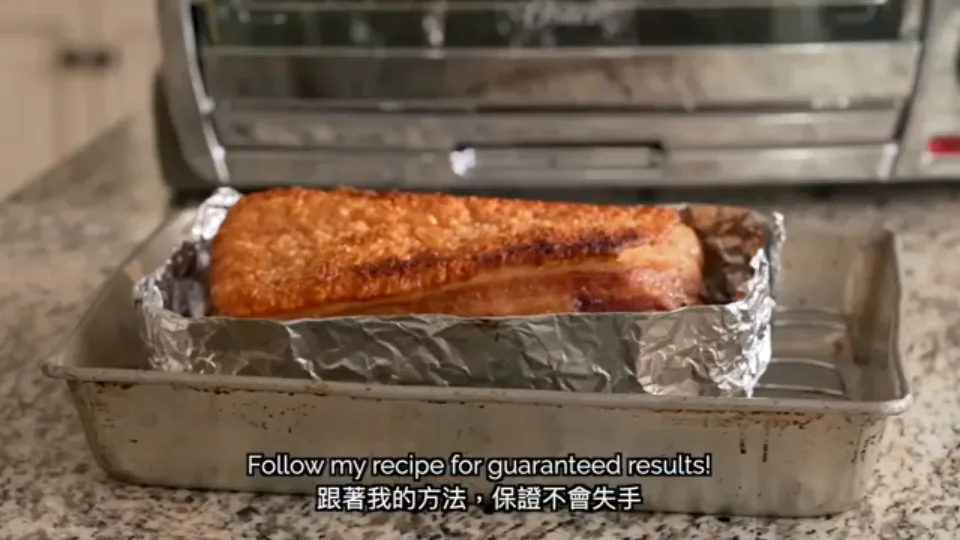 Time 35 minHeat 425°F (218°C)
After 20 to 25 minutes, increase the oven temperature to 425°F (218°C) and roast for another 30 to 35 minutes (about 1 hour total) until the skin puffs and blisters into a golden crackling and the internal temperature reaches at least 145°F (62.8°C). Remove from the oven and let rest undisturbed for 1 full hour so the juices redistribute.
How to tellThe entire top rind is puffed with golden, bubbly blisters without burnt spotsCommon mistakeCheck the skin 10-15 minutes before the hour mark to prevent charring, and never slice while piping hot or the juices will run outWatch at 12:51Slice Along the Scored Lines into Strips and Chop into Bite-Sized Pieces
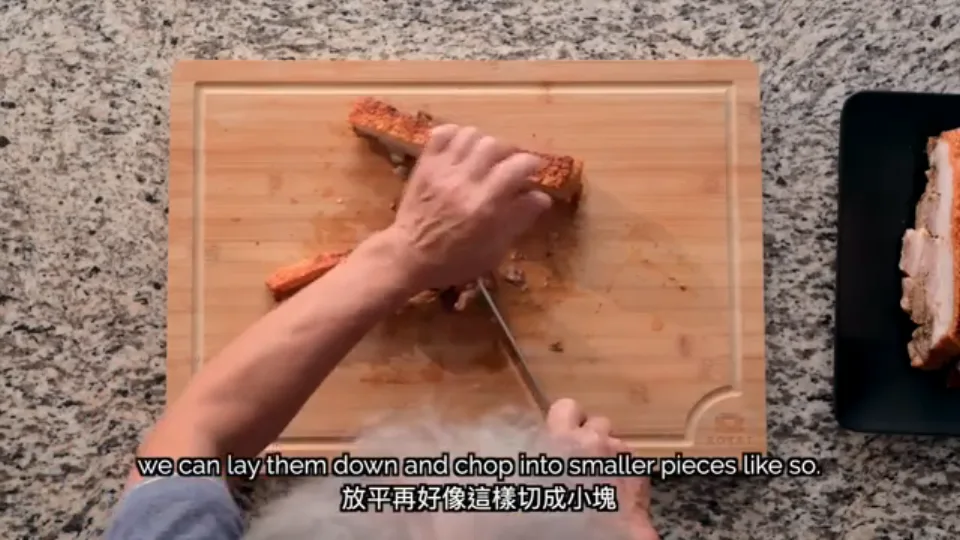 Time 5 min
Once rested for 1 hour, transfer the roast pork to a cutting board. Slice straight down along the pre-scored lengthwise lines through the crispy skin to divide into four long strips, then lay each strip flat on its side and chop across into bite-sized pieces.
How to tellThe knife crunches cleanly through the crackling, revealing five juicy layers of fat and lean meatWatch at 14:01
Chef's secrets
Choose Thick-Skinned, Five-Layered Pork Belly
The soul of Siu Yuk is its crackling. Always verify that the pork belly is skin-on (frozen packages can hide skinless cuts) and look for thick skin with five distinct alternating layers of fat and lean meat. Thick skin puffs into a light, airy crunch rather than turning thin and hard.
Dense Holes, Salt Dehydration, and White Vinegar Drive the Blistering
Tough, chewy skin happens when holes are too sparse or moisture remains trapped inside. Parboiling softens the rind so paired toothpicks can prick thousands of tiny vents; a 5-minute salt rest pulls out deep water droplets before being scraped away; white rice vinegar cuts grease, and 10-12 hours uncovered on the top fridge shelf near the air vent dries the skin bone-dry.
A Foil Box and Water Pan Protect the Meat Under High Heat
Blistering pork skin demands 425°F heat, which would easily burn sugar-and-bean-paste marinated meat. Wrapping the four sides in a snug foil box and elevating the roast on a wire rack over 1/2 cup of water shields the meat and keeps it succulent while intense top heat blisters the rind.
Two-Stage Oven Roasting and a Full 1-Hour Rest
Roasting in two stages—375°F for 20-25 minutes to cook the interior, followed by 425°F for 30-35 minutes to pop the skin—ensures tender meat and shattering crackling. Resting the roast for a full hour after baking allows the hot juices to settle back into the meat fibers instead of pooling on the cutting board.
Storage & reheating
Fridge
Store cooled leftover Siu Yuk in an airtight container in the refrigerator for 2 to 3 days.
Freezer
If keeping for more than a week, freeze in a sealed container and thaw completely before reheating.
Reheating
Arrange pieces in a single layer and reheat in a toaster oven, oven, or air fryer until the skin crisps back up. Never use a microwave or steamer, which will make the crackling soggy.
Variations
Air Fryer or Full-Size Oven Adaptation
You can also roast Siu Yuk in an air fryer or a standard full-size oven. Because full-size ovens radiate stronger heat than toaster ovens, reduce both temperature stages by about 25°F (350°F for 20-25 minutes, then 400°F for 30-35 minutes) and check the skin 10-15 minutes before the end.
Classic Salt-and-Pepper Version (Without Bean Sauce or Five-Spice)
As Daddy Lau notes, if you don't have ground bean sauce on hand or prefer a cleaner spice profile without five-spice powder, simply omit them and season the meat with the salt, garlic salt, and black and white pepper.
FAQ
Why did my pork belly skin turn out hard instead of puffing into crispy blisters?
The two main culprits are poking too few holes and not drying the skin thoroughly. Prick holes as densely as possible across the entire rind, draw out moisture with a 5-minute salt rest (then scrape it off), brush with white rice vinegar, and air-dry uncovered on the top fridge shelf for 10-12 hours before roasting.
Can I mix the ground bean sauce and sugar together with the dry spice rub beforehand?
No. Mixing the wet bean paste with the dry spices beforehand causes clumping and prevents even seasoning. Always rub the dry spice blend into the meat and scored crevices first, then layer the bean sauce and sugar mixture on top.
Should I leave the 1 tablespoon of salt on the skin during roasting or scrape it off?
In Daddy Lau's method, you scrape the salt off completely after 5 minutes. Once the salt has drawn out the moisture beads and turned wet, scrape it all away with a knife blade before brushing on the white rice vinegar and refrigerating.
Why do I have to wait 1 hour before slicing the roasted pork belly?
Right out of the oven, the interior juices are hot and turbulent; slicing immediately causes all those flavorful juices to spill out onto the board. Resting for 1 hour lets the juices settle and reabsorb into the meat so every piece stays succulent.
How do I reheat leftover Siu Yuk so the skin stays crispy?
Arrange leftover pieces in a single layer and heat them in a toaster oven, regular oven, or air fryer until the skin crisps back up. Never microwave or steam Siu Yuk, as moisture will ruin the crackling.
Nutrition
Estimated per serving. Actual values vary with ingredients and portion size.
No time to cook?
The same wok-fired cooking, already made for you at Bryt Kitchen.
See the menu