
Video recipe
Classic Hong Kong Style Milk Tea
Rich. Bold. Silky Smooth.
Adapted from 〈職人吹水〉@SingSingKitchen
Every step links back to that moment in the video
An authentic 1970s–80s Hong Kong cha chaan teng classic that blends fine Ceylon fannings for color and body with Lipton Yellow Label for floral aroma. Brewed gently in a traditional cotton tea sock and pulled four times to aerate and smooth tannins, then finished with rich Dutch evaporated milk for the signature silky texture.
What makes this version work
Golden tea blend ratio: 100g fine Ceylon fannings for depth and color paired with 20g Lipton Yellow Label for aromatic lift
Dual low-heat brewing technique: 8-minute initial steep followed by a 3-4 minute final resting brew
Four-stage tea pulling: tossing tea through the cotton sock aerates the liquor, rounding out astringency into silky smoothness
Pre-warmed ceramic cup and tea-into-milk collision: pouring boiling tea directly into evaporated milk creates instant natural emulsification
Ingredients
Tap to check off — your progress is saved
Tea Blend Base
- Fortune General Fine Ceylon Black Tea Fannings 100gFine Ceylon tea fannings, provides rich body and deep color
- Lipton Yellow Label Ceylon Black Tea 20gMedium leaf Ceylon black tea, provides aromatic lift
- Boiling Water 2500mlMaintained at 95°C–98°C rolling boil
Per Serving Assembly
- Black & White Full Cream Evaporated Milk 60ml50–70 ml per cup, approx. 1/3 of cup volume
- Granulated White Sugar to tasteApprox. 1–2 tsp per cup, adjust to personal taste
Equipment
- Traditional Cotton Tea Sock with Wire Handle
- Hong Kong Cha Chaan Teng Stainless Steel Tea Pot & Pitcher
- Heavy-Duty Ceramic Tea Cups (Classic Thick-Rimmed Diner Cups)
- Digital Kitchen Scale
Steps
Blend tea leaves into cotton tea sock
 Time 2 min
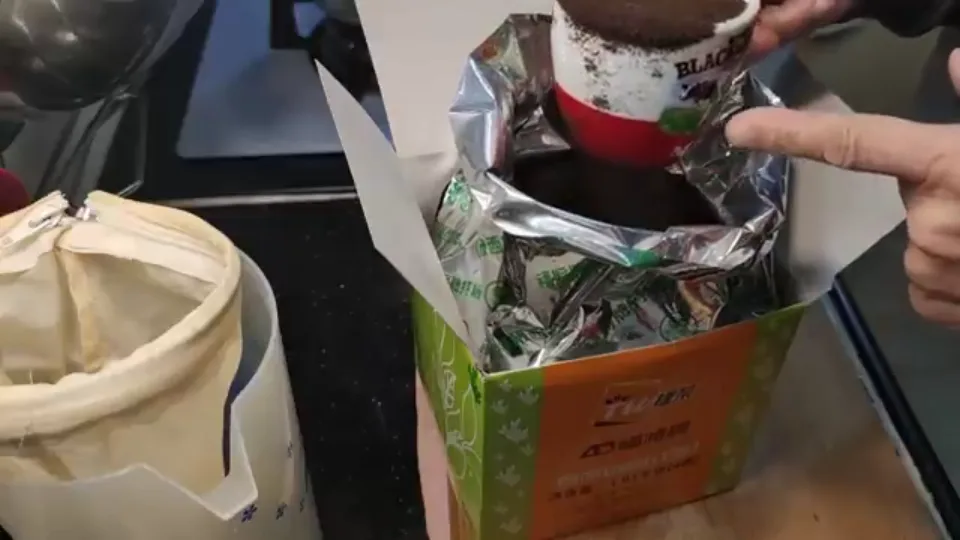
Accurately weigh 100g of Fortune General fine Ceylon tea fannings and 20g of Lipton Yellow Label black tea using a digital scale. Pour both into the cotton tea sock, shake gently to distribute evenly, and rest the metal handle across the rim of the stainless steel teapot.
How to tellFine fannings and Lipton tea blended evenly inside the cotton tea sock resting in the teapot.Watch at 16:55Pour boiling water over tea leaves
 Time 2 min
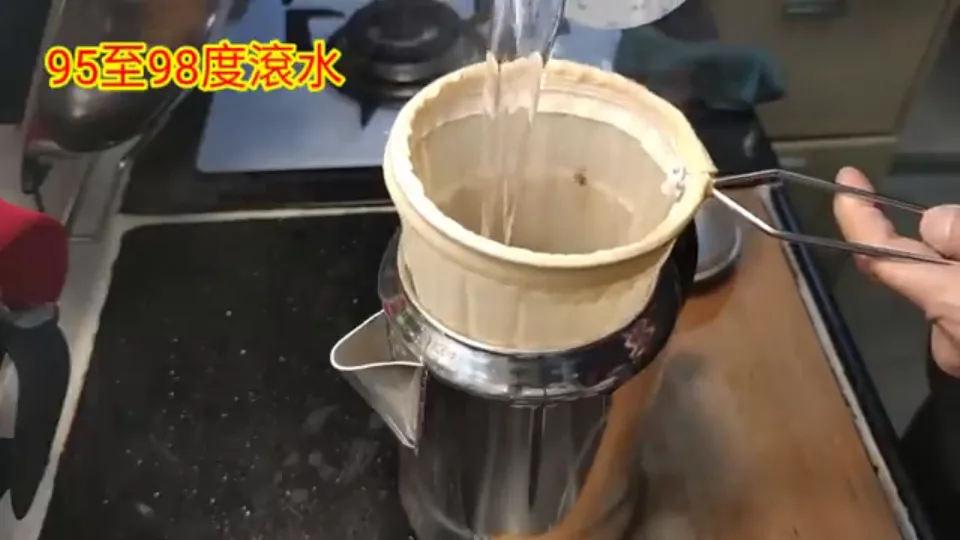
Slowly pour 2.5 liters of boiling water (95°C–98°C) directly into the center of the tea sock in a steady stream. Ensure all tea leaves are fully drenched so the extracted dark tea liquor filters smoothly into the teapot below.
How to tellBoiling water saturates the tea sock, causing deep amber foam to bloom as the liquor collects in the pot.Watch at 19:50First brew on minimum flame for 8 minutes
 Time 8 minHeat Minimum low heat
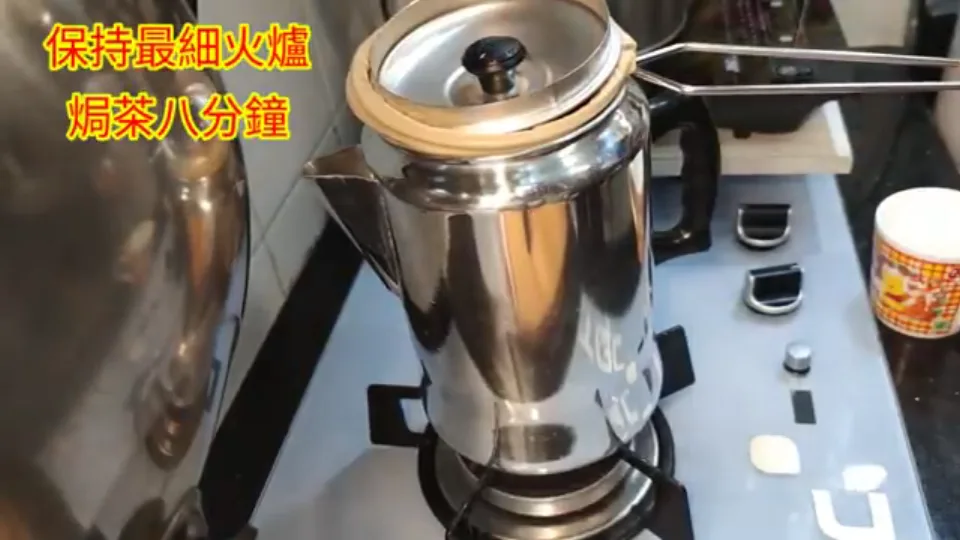
Place the lid snugly over the tea sock and place the teapot over the lowest possible stove flame. Let it steep undisturbed for 8 minutes under steady gentle heat, allowing the full spectrum of tea polyphenols and deep pigments to extract.
How to tellTeapot lid securely covers the tea sock over a whisper of flame, maintaining heat without boiling over.Common mistakeKeep the flame at absolute minimum; vigorous boiling will scorch the leaves and create unpleasant sour bitterness.Watch at 20:40Toss and pull the tea four times
 Time 2 min
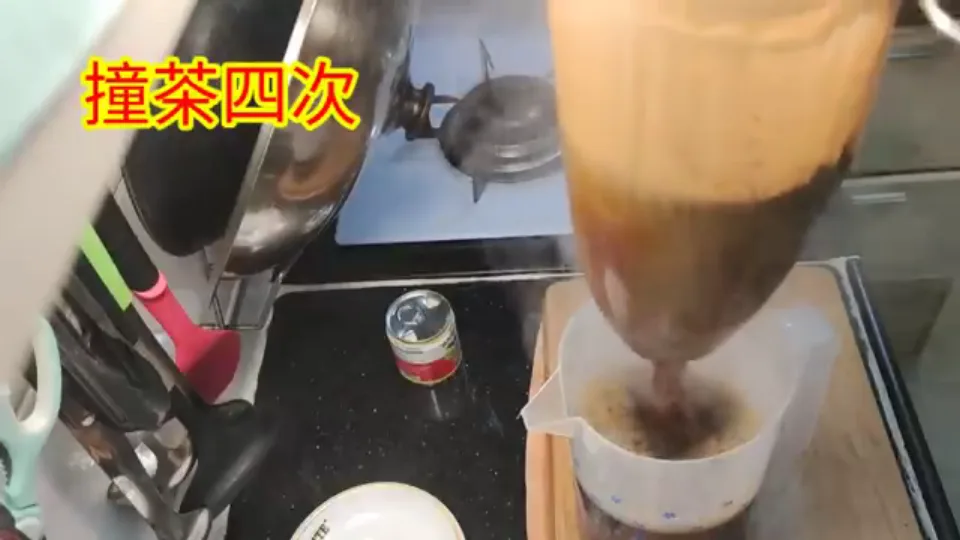
After 8 minutes, uncover the pot. Lift the tea sock above a large pitcher or second teapot, and pour the hot tea liquor from a height through the tea sock in a smooth cascade. Repeat this pulling process back and forth 4 times to aerate the liquor, elevating floral aromatics and smoothing harsh tannins.
How to tellDark tea streams from a height like a waterfall into the tea sock, generating dense microfoam from aeration.Watch at 34:55Second low-heat brew for 3–4 minutes
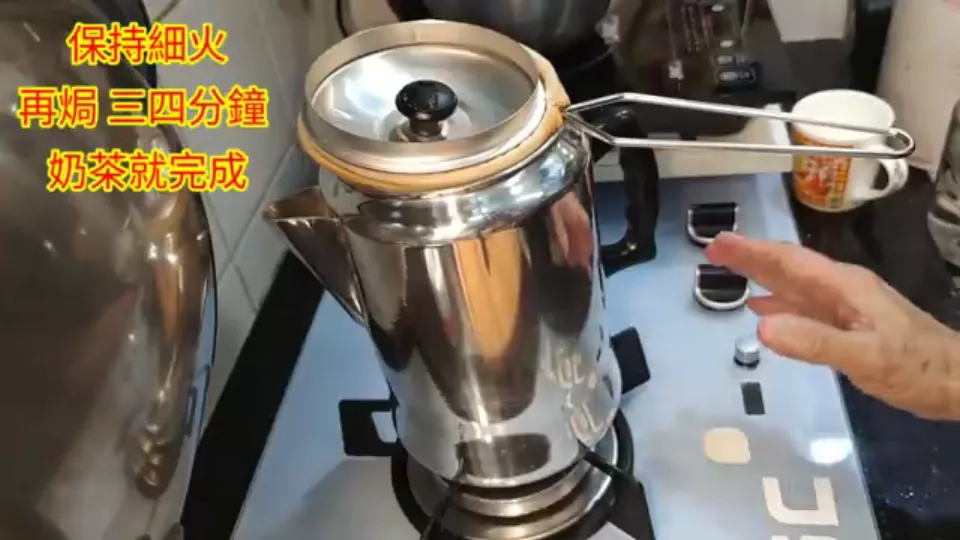 Time 4 minHeat Minimum low heat
Once pulled, return the tea sock into the teapot and replace the lid. Keep on the lowest flame to steep for another 3 to 4 minutes, reheating the tea base to peak serving temperature while settling the flavor profile.
How to tellTea sock returned inside the pot, covered and resting over gentle low heat as rich tea aroma fills the air.Watch at 36:40Warm the heavy ceramic cups
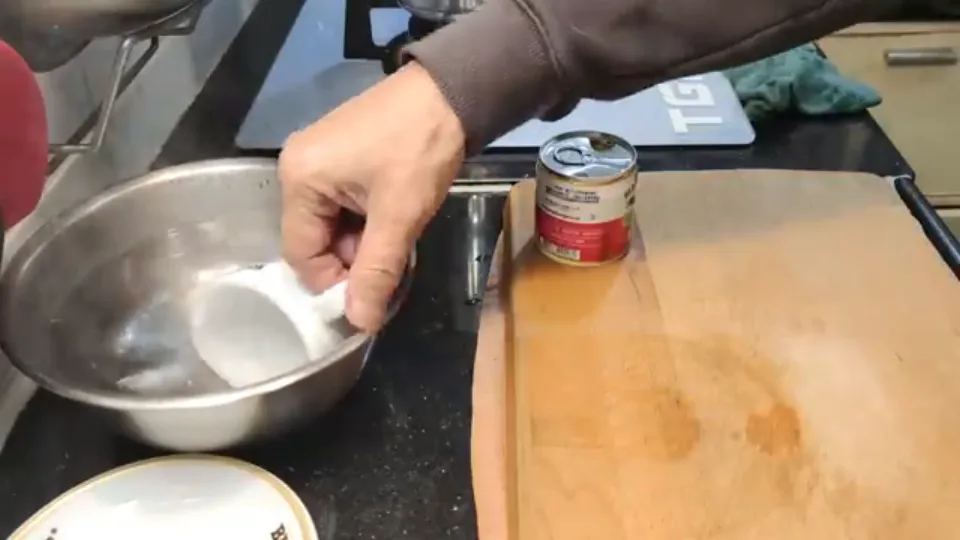 Time 1 min
Take traditional thick-walled ceramic cha chaan teng cups and fill with boiling water (or immerse in a hot water basin) to preheat. Let the heavy ceramic absorb heat for 30 seconds, then discard the water. Pre-warming prevents thermal shock and preserves dairy aromatics.
How to tellThick ceramic cup immersed into hot water basin to absorb heat thoroughly before emptying.Watch at 37:47Pour evaporated milk into the preheated cup
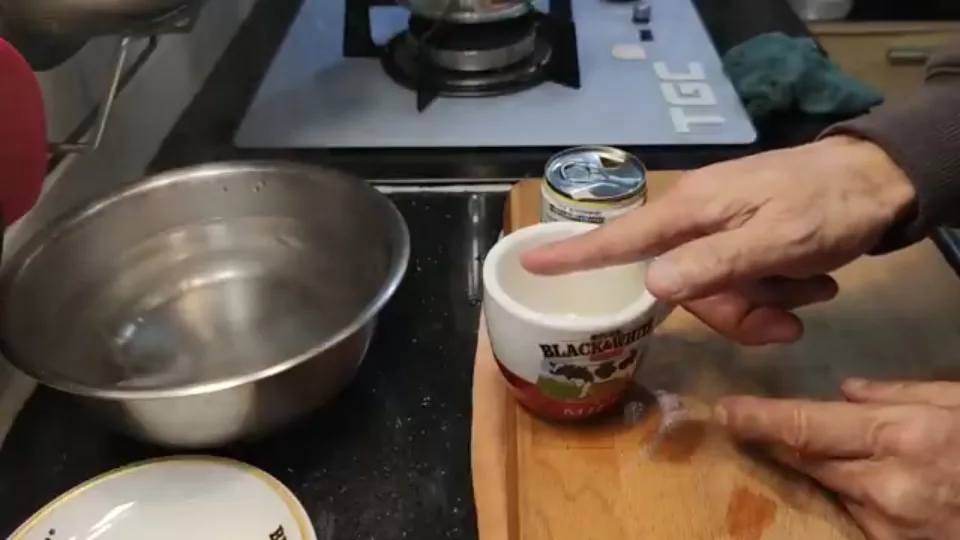 Time 1 min
Pour 50 to 70 ml of Black & White whole evaporated milk into the pre-warmed cup (targeting a 7:3 tea-to-milk ratio). Always add milk before tea so the dairy is primed to receive the hot tea stream.
How to tellRich, creamy Black & White evaporated milk poured into the warm cup, filling roughly one-third of the vessel.Watch at 38:28Pour hot tea from a height into milk & stir with sugar
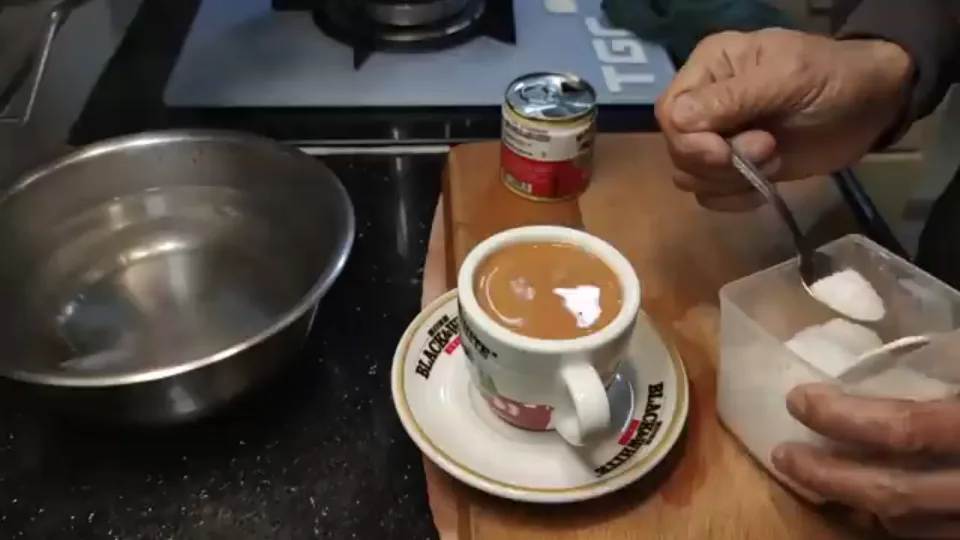 Time 1 min
Lift the teapot slightly and pour the boiling tea base directly into the evaporated milk in a vigorous stream, allowing the collision forces to naturally emulsify tea and milk. Stir in 1 to 2 teaspoons of granulated sugar to taste and enjoy immediately while piping hot.
How to tellBoiling dark tea streams into evaporated milk, stirred with granulated sugar into a glossy, caramel-toned golden milk tea.Watch at 39:35
Chef's secrets
The Logic Behind Tea Grade Blending
Hong Kong milk tea relies on blending different grades of Ceylon black tea. Fine dust/fannings extract rapidly to deliver deep amber color and heavy body; medium leaves (like Lipton Yellow Label) contribute floral aroma and a sweet aftertaste; coarse leaves provide backbone. A 5:1 ratio of fine fannings to medium leaf achieves professional cha chaan teng balance at home.
Aeration and Tannin Softening via Four Pulls
Pulling tea is not just theatrical—it is essential for flavor chemistry. Streaming hot tea through air into the cotton sock oxygenates the brew, softening bitter polyphenols and releasing volatile aromatic compounds trapped deep inside leaf particles, creating that iconic velvety mouthfeel.
Full-Cream Evaporated Milk & The 'Tea-Into-Milk' Rule
Authentic HK milk tea requires full-cream evaporated milk (such as Black & White). The high natural milkfat coats the palate and mellows bold tannins, which skimmed or plant-based milks cannot replicate. Crucially, pouring boiling tea into room-temperature milk creates instantaneous thermal emulsification without scorching milk proteins.
Storage & reheating
Fridge
Unused tea base can be cooled and stored in an airtight glass bottle in the refrigerator for 1–2 days. Reheat until boiling before pouring into evaporated milk, or pour over ice cubes with milk for iced milk tea.
Reheating
Reheat refrigerated tea base gently in a small saucepan until just simmering; avoid vigorous boiling to prevent sour notes from developing.
FAQ
Can I substitute fresh milk or non-dairy creamer for evaporated milk?
Not recommended. The tea base is concentrated and robust; regular fresh milk contains too much water and dilutes the body, while non-dairy creamers lack authentic dairy depth. Full-cream evaporated milk has reduced water content and rich milkfat, essential for proper body and balance.
Can I use a metal strainer or standard tea infuser instead of a cotton tea sock?
The dense weave of a traditional cotton tea sock retains micro-fine tea dust while creating optimal resistance during pulling. Standard metal strainers let fine sediment pass through, causing grittiness. If unavailable, an unbleached cotton brew bag or flannel coffee filter is the best alternative.
Why does homemade milk tea sometimes taste overly bitter or sour?
Over-bitterness or sourness usually stems from: boiling the tea too hard during brewing (scorching), steeping longer than 12 minutes (over-extracting tannins), or using insufficiently hot water. Keeping the flame at minimum and sticking to the 8-minute brew and 4 pulls will keep bitterness balanced.
How do I make iced Hong Kong milk tea using this tea base?
For iced milk tea, dissolve sugar directly into the hot tea base first, stir in evaporated milk, then pour over a full glass of ice cubes. Alternatively, chill the blended milk tea in the fridge without ice (known as ice-bath milk tea) so ice melt never dilutes the drink.
Nutrition
Estimated per serving. Actual values vary with ingredients and portion size.
No time to cook?
The same wok-fired cooking, already made for you at Bryt Kitchen.
See the menu