
Video recipe
Shanghai Shengjianbao & Taiwanese Chewy Almond Tofu
Crispy. Chewy. Juicy perfection.
Adapted from 好好制作
Every step links back to that moment in the video
This feature brings together two authentic street food and dessert classics. Chef Ricky Cheung recreates Shanghai's renowned Xiaoyang Shengjianbao with a thin, unfermented crust and an equal-weight chicken broth aspic filling that bursts with soup upon the first bite. Chef Jacky Yu shares the coveted formula for Taipei's famous chewy almond tofu, pairing fresh apricot kernels with Taiwanese potato starch cooked slowly into an elastic, mochi-like delight.
Estimated timing — actual time may vary with cooking speed and heat.
What makes this version work
The pan-fried buns use a thin baking-powder dough fried pleat-side down, creating a crispy base without greasy doughiness.
A quick gelatin-chicken broth aspic replaces boiled pork skin at a 1:1 ratio with pork mince for explosive soupy filling.
Southern and northern apricot kernels are blended at a 4:1 ratio for balanced sweetness and authentic fragrance.
The almond starch batter is gently stirred from a cold pan, then folded over heat until developing a stretchy mochi-like elasticity.
Ingredients
Tap to check off — your progress is saved
Taiwanese Chewy Almond Tofu - Almond Batter
- Sweet apricot kernels (Southern almonds) 240gWashed and drained
- Bitter apricot kernels (Northern almonds) 60gWashed and drained
- Water 1500mlFor blending almonds
- Taiwanese potato starch 300gKey to bouncy chewy texture, do not substitute with cornstarch
- Granulated sugar 60g
Taiwanese Chewy Almond Tofu - Syrup & Toppings
- Water 800ml
- Rock sugar 100gBoiled with water until dissolved, then chilled
- Fresh fruits & toppings to tasteTo taste: diced mango, blueberries, cherries, and mint leaves
Xiaoyang Shengjianbao - Broth Jelly Aspic
- Clear chicken broth 200g
- Gelatin sheets 10gCut or softened in cold water
Xiaoyang Shengjianbao - Bun Dough
- All-purpose flour 260g
- Baking powder 3gBaking powder
- Water 150g
- Vegetable oil or lard 15g
Xiaoyang Shengjianbao - Pork Filling & Toppings
- Minced pork 200gWith a little fat for flavor
- Salt 4g
- Sugar 4g
- Dark soy sauce 4g
- Sesame oil 5g
- Shaoxing wine 10g
- Minced ginger 5gFinely minced
- Chopped scallions 10gFor meat filling
- Water 30gBeaten into pork mince
- Black and white sesame seeds to tasteTo taste, sprinkled before serving
- Chopped scallions to tasteTo taste, sprinkled for garnish
- Cooking oil to tasteFor pan-frying
Equipment
- Non-stick frying pan
- High-speed blender
- Nut milk or soy milk filter bag
- Flat rectangular metal tray
- Heatproof silicone spatula
Steps
Blend apricot kernels and strain into smooth almond milk
 Time 8 min
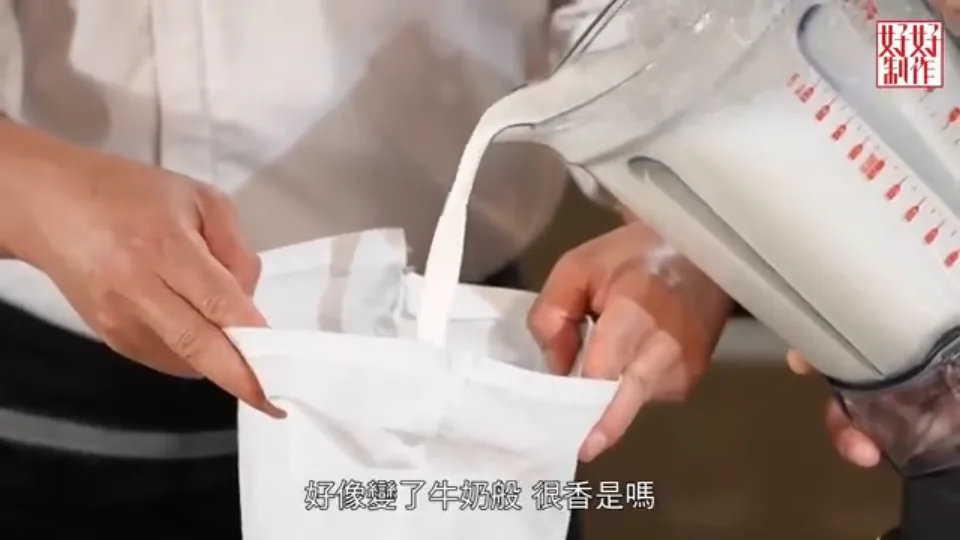
Rinse and drain 240g southern apricot kernels and 60g northern apricot kernels. Transfer to a high-speed blender, add 1,500ml of water, and blend until milky smooth. Pour into a nut milk filter bag and squeeze thoroughly to separate the pulp, keeping the silky almond milk.
How to tellThe strained milk appears bright white like whole milk with fine, dry pulp left in the bag.Watch at 4:10Blend almond milk with Taiwanese potato starch and sugar
 Time 3 min
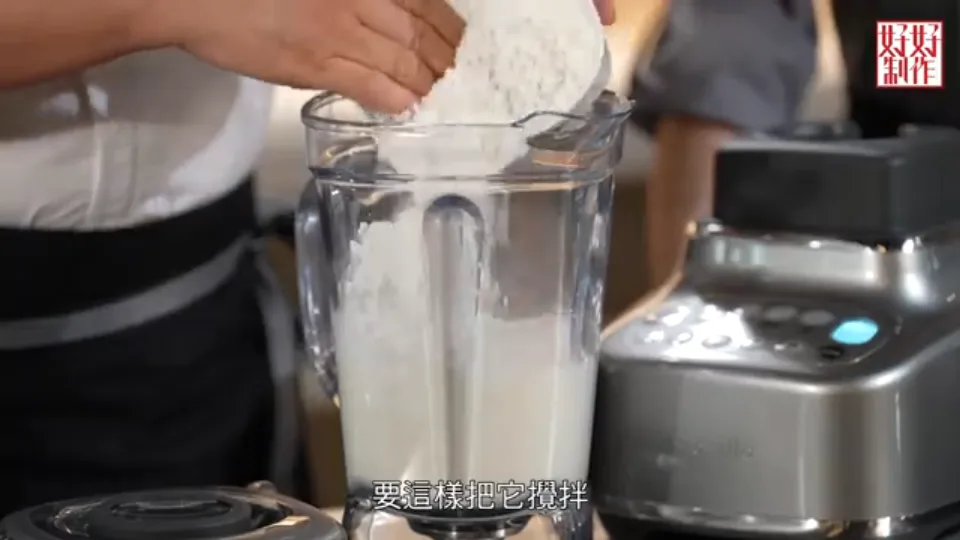
Return the strained almond milk to the blender jar, then add 300g Taiwanese potato starch and 60g granulated sugar. Blend briefly on low to medium speed until the starch is completely dissolved and suspended without lumps or sediment.
How to tellThe batter flows smoothly like light cream without clinging dry starch lumps on the blender walls.Watch at 4:35Start from a cold pan and stir slowly over low heat
 Time 8 minHeat Low heat
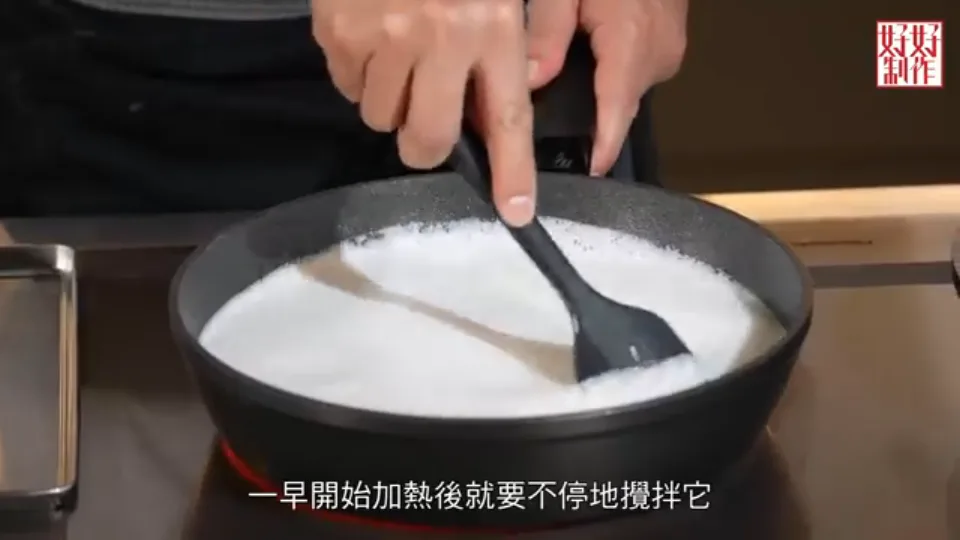
Always pour the almond starch slurry into a cold, non-stick pan before turning on the heat. Set to low heat (around level 4 on induction) and stir constantly with a heatproof spatula in circles along the bottom and sides to ensure even heating and prevent lumps.
How to tellAs the temperature rises, surface foam dissipates and the liquid warms into a glossy, uniform liquid.Common mistakeNever pour batter into a hot pan or use high heat, as starch will instantly seize into irreversible lumps.Watch at 6:30Fold and stir as paste thickens into elastic mochi texture
 Time 12 minHeat Medium-low heat
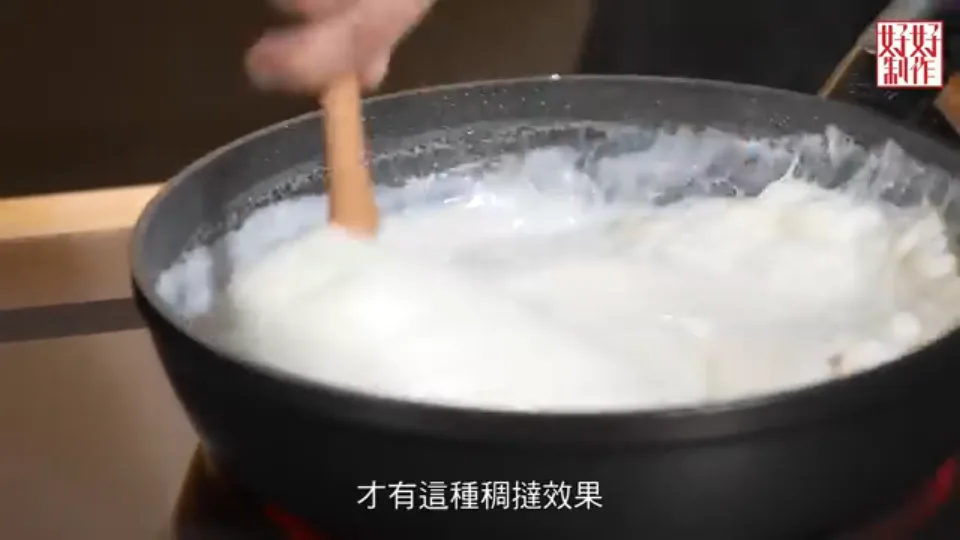
Once the slurry begins thickening into a semi-solid paste, adjust the heat to medium-low (level 6). Stir and fold vigorously with the spatula. The mixture will turn semi-translucent and become extremely stretchy, developing high mochi-like elasticity.
How to tellThe cohesive paste pulls away cleanly from the pan without sticking and stretches into an elastic, translucent ribbon.Watch at 8:00Transfer while hot into a flat pan and smooth with plastic wrap
 Time 5 min
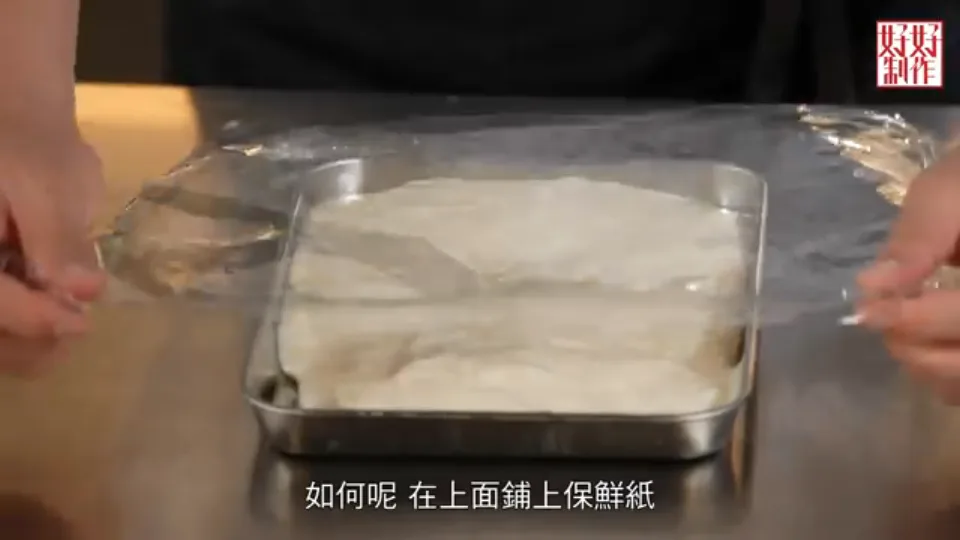
While the paste is still scalding hot and pliable, immediately scrape it into a shallow flat rectangular container. Lay a sheet of plastic wrap directly onto the surface to adhere, then gently press with hands to an even 1cm slab. Let cool to room temperature.
How to tellThe surface becomes smooth like glass under the plastic film with uniform thickness throughout.Common mistakeDo not delay transfer; once cooled, the paste firms up rapidly and cannot be smoothed.Watch at 9:30Chill, slice with wet knife, and serve with iced syrup and fruit
 Time 5 min
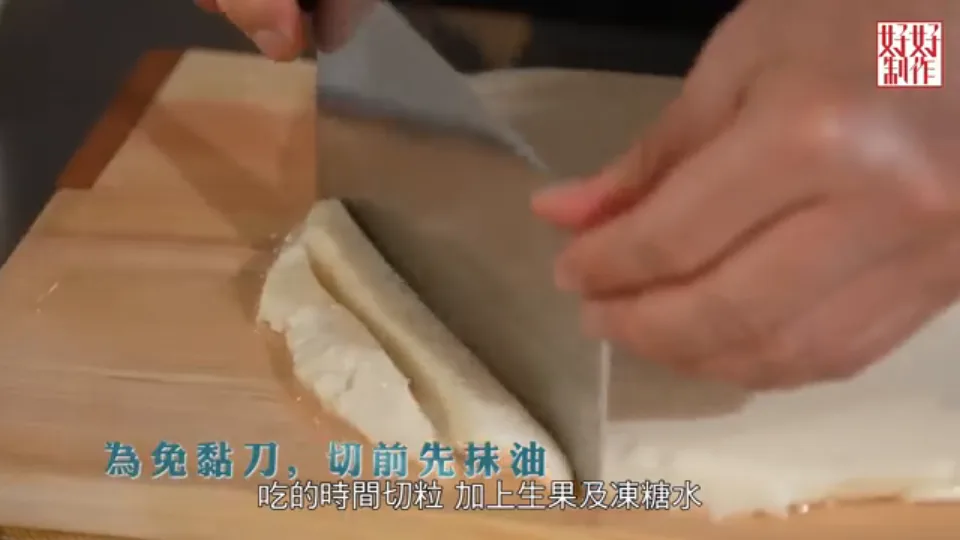
Chill the cooled almond tofu in the refrigerator overnight to fully set. Moisten the knife and cutting board with water before slicing into bite-sized diamond cubes, and hold them in cold water so they do not stick together. Drain and serve with chilled rock sugar syrup, fresh mango, and berries.
How to tellClean, defined edges that glisten in water, offering a remarkably chewy and bouncy mouthfeel.Watch at 9:40Dissolve gelatin sheets in warm chicken broth and chill into aspic
 Time 10 minHeat Low heat
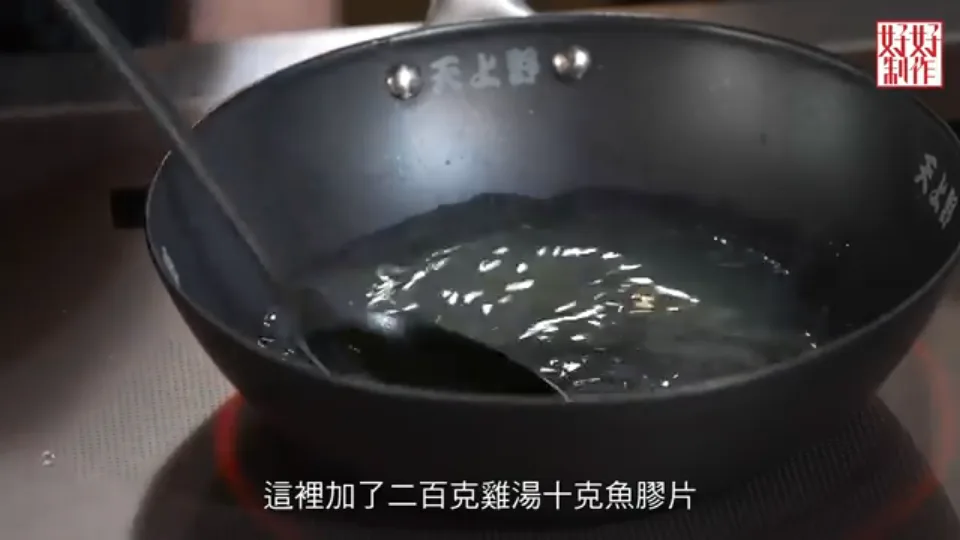
Pour 200g clear chicken broth into a pan and warm gently over low heat to 50-60°C. Add 10g softened gelatin sheets and stir until completely dissolved. Pour into a flat shallow tray and chill in the refrigerator until firm, then finely dice into translucent aspic cubes.
How to tellThe clear golden broth sets into firm, glistening cubes that melt instantly upon heating.Watch at 13:10Knead all-purpose flour, baking powder, oil, and water into smooth dough
 Time 15 min
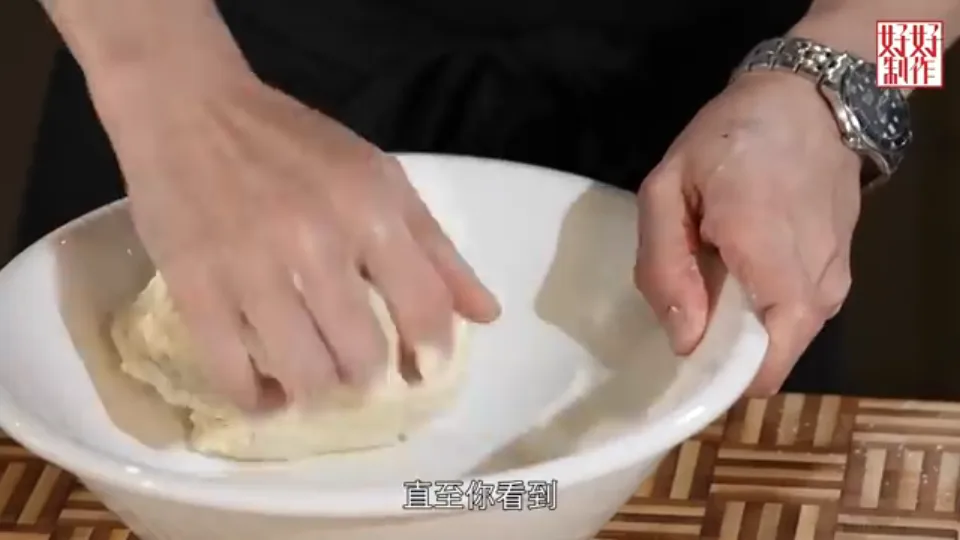
Combine 260g all-purpose flour and 3g baking powder in a bowl, then add 15g vegetable oil and 150g water. Stir with chopsticks into shaggy dough, transfer to a counter, and knead for 10-15 minutes until smooth and supple. Cover and rest for 1 hour.
How to tellDough becomes silky smooth and pliable, bouncing back gently when pressed.Watch at 15:00Season pork mince and fold in equal weight of diced aspic
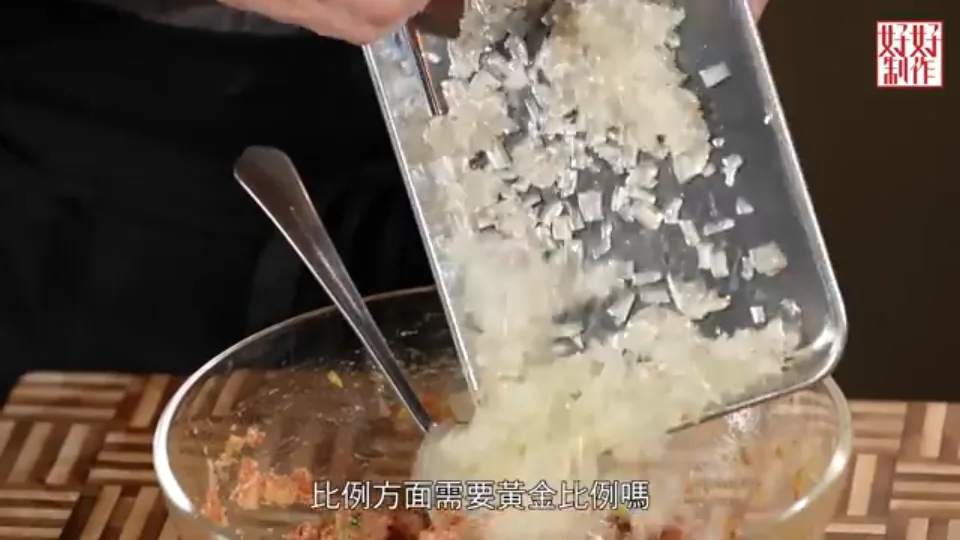 Time 10 min
Season 200g minced pork with 4g salt, 4g sugar, 4g dark soy sauce, 5g sesame oil, 10g Shaoxing wine, and 30g water, stirring vigorously in one direction until sticky. Fold in 5g minced ginger, 10g scallions, and 200g diced aspic. Chill for 30 minutes to firm up for wrapping.
How to tellThe seasoned mince holds together firmly with translucent aspic cubes evenly studded throughout.Watch at 17:26Divide dough, enclose pork filling, pleat, and pinch off excess knot
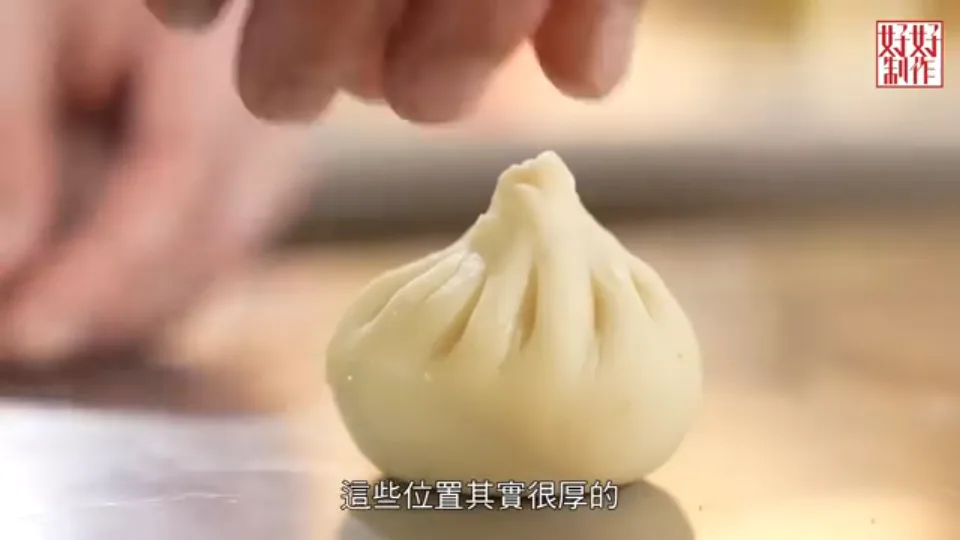 Time 15 min
Roll the rested dough into an even rope and divide into 25-30g dough balls. Flatten and roll into round wrappers with thinner edges. Spoon an equal amount (25-30g) of meat filling into the center, pleat tightly closed, and pinch off the excess dough knot at the apex so the crust cooks evenly.
How to tellThe wrapper is completely sealed without leaks, and removing the thick knot leaves an evenly shaped, plump dumpling.Common mistakeFailing to remove the excess top knot leaves an unpleasantly dense, undercooked lump of dough.Watch at 18:50Fry pleat-side down until golden, add water to 1/3 height, and steam-fry covered
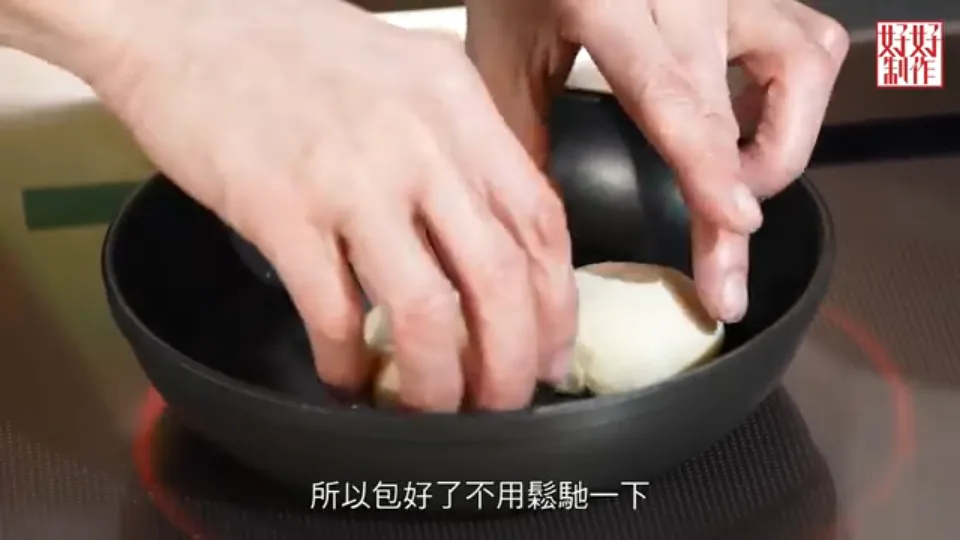 Time 8 minHeat Medium-high heat
Heat oil in a skillet and arrange buns pleat-side down. Pan-fry over medium heat for 2-3 minutes until bottoms are crisp and golden. Pour in water to reach one-third the height of the buns, immediately cover with a tight lid, and steam-fry over medium-high heat for 5-6 minutes until water evaporates.
How to tellBottom crust turns deep golden-brown, and trapped steam causes the buns to puff up plumply.Watch at 19:10Garnish with sesame seeds and scallions, then cover for 30 seconds
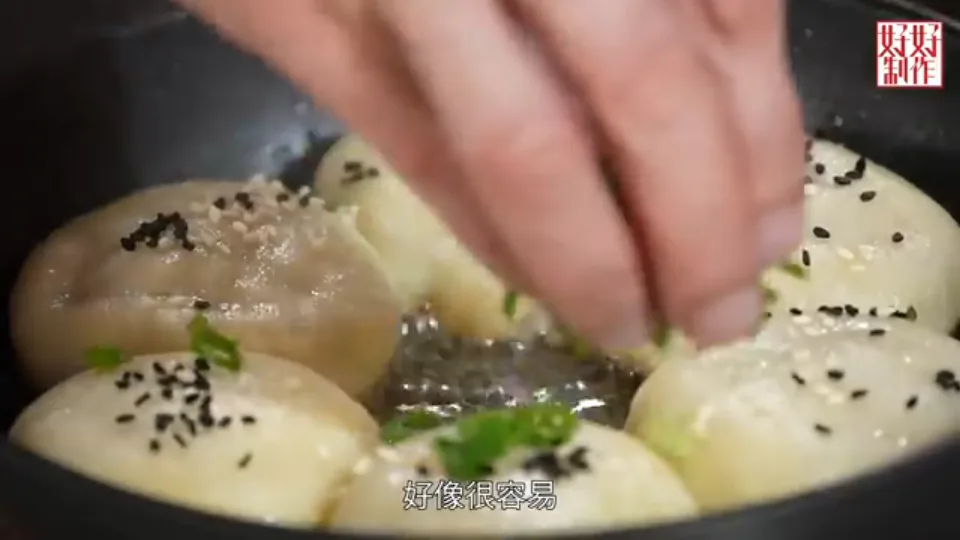 Time 1 minHeat Residual heat
Remove the lid while the oil gently sizzles. Generously sprinkle black and white sesame seeds and chopped scallions over each bun. Cover again for 30 seconds to let the residual steam infuse the scallion aroma, then remove from heat. Nibble a small corner to sip the scalding soup before enjoying with black vinegar.
How to tellScallions wilt slightly and release fragrant aroma, sesame seeds toast lightly, and the crust sizzles with a crisp snap.Common mistakeThe hot soup inside will squirt under pressure; nibble a tiny hole to vent before eating.Watch at 20:00
Chef's secrets
Taiwanese potato starch is the secret to mochi-like chew
While typical almond tofu relies on gelatin or agar to create a brittle jelly, Taipei's classic version depends strictly on Taiwanese potato starch. Continual folding and stirring during gelatinization creates a mochi-like elasticity and stretchy chewiness that stays bouncy even when cold.
Start cold over low heat to prevent starch clumps
Always pour the almond slurry into a cold pan. If the pan is hot or the heat is too strong, the starch on the bottom will instantly seize into irreversible hard lumps. Patient stirring over low heat until foam vanishes ensures a silky, lump-free emulsion before higher heat develops elasticity.
Equal-weight chicken broth aspic guarantees torrential soup
Instead of simmering pork rind for hours, Chef Ricky uses chicken broth melted with gelatin sheets to create quick aspic. Crucially, the ratio of meat to aspic must be exactly 1:1 (200g pork to 200g aspic). When pan-fried, the aspic completely liquefies into rich, savory broth inside every bun.
Unfermented thin wrapper and pinched knot ensure crisp frying
Shanghai Xiaoyang style uses a thin dough with only a trace of baking powder rather than thick yeasted bread. Pinching off the excess pleated knot at the top and frying the buns pleat-side down turns the thickest seal into a crispy golden base, ensuring thin skin that doesn't soak up excess grease.
Storage & reheating
Fridge
Store cooked buns in the fridge up to 2 days and reheat in a skillet with a splash of water and oil; store almond tofu in water up to 3 days.
Freezer
Freeze uncooked buns for up to 1 month and cook directly from frozen; do not freeze almond tofu as freezing destroys its structure.
Reheating
Avoid microwaving buns as it makes the wrapper soggy and tough; reheat in a covered frying pan with a drop of oil over low heat for 3 minutes.
FAQ
Can cornstarch or regular potato starch replace Taiwanese potato starch?
No. Cornstarch yields a pasty gel with zero chew, while tapioca starch becomes overly sticky and gummy. Authentic Taiwanese potato starch is strictly required to produce the characteristic firm, bouncy, mochi-like chewiness.
Why does the almond tofu stick to the knife when slicing?
High elasticity and starch content cause the tofu to stick stubbornly to dry blades. Always wipe both sides of your chef's knife and cutting board with water or a little cooking oil, and immediately plunge the sliced cubes into cold water.
Can homemade aspic use pork broth or water instead of chicken broth?
Pork bone broth works wonderfully and adds deeper savoriness, but plain water is not recommended. The signature joy of shengjianbao is sipping rich, seasoned broth; plain water severely dilutes the filling's flavor.
How do you know when to add water and when the buns are finished?
After frying over medium heat for 2-3 minutes, lift one bun; if the bottom is evenly golden, immediately pour in water to 1/3 height and seal the lid. Steam-fry for 5-6 minutes until the bubbling water is gone and you hear crisp sizzling.
Can uncooked shengjianbao be frozen ahead of time?
Yes. Place assembled raw buns on a floured tray without touching and freeze until solid, then transfer to a freezer bag. Cook directly from frozen without thawing, adding 1-2 extra minutes to the covered steaming phase.
Nutrition
Estimated per serving. Actual values vary with ingredients and portion size.
No time to cook?
The same wok-fired cooking, already made for you at Bryt Kitchen.
See the menu