
Video recipe · Mains
Cantonese Honey-Glazed Char Siu (BBQ Pork)
Charred. Glossy. Juicy.
Adapted from Martin's Cuisine
Every step links back to that moment in the video
Cantonese honey-glazed char siu is a roast shop classic built on balanced savory-sweet depth and precise heat control. This recipe from Martin's Cuisine starts with fresh papaya puree to gently tenderize pork collar butt before marinating overnight in a homemade sauce of red fermented bean curd, mo shi sauce, hoisin, peanut butter, sesame paste, and rose dew wine. Roasted on a wire rack across two temperature stages and twice-glazed with a bubbling maltose syrup, the pork develops blistered, glossy edges while staying succulent—with skillet and air-fryer adaptations included.
Estimated timing — actual time may vary with cooking speed and heat.
What makes this version work
Pork is tenderized first in 300 g fresh papaya puree for 2 hours to soften meat fibers with mild fruitiness, or soaked in soda water (2 g baking soda in 500 ml water).
The homemade marinade layers red fermented bean curd, mo shi sauce, and hoisin with peanut butter, sesame paste, and rose dew wine for rounded aroma, umami, and deep red color.
Roasting on an elevated wire rack without parchment paper underneath allows moisture and fat to drip away so the surface dries and chars cleanly.
Called 'honey sauce' in Cantonese because 'maltose' and 'honey' sound alike, real char siu glaze uses maltose syrup boiled with water and rose dew wine for bright shine without cloying sweetness.
Ingredients
Tap to check off — your progress is saved
Pork & Tenderizer (for 1.5–2 kg pork)
- Pork Collar Butt (Pork Shoulder Butt) 1750gRecipe scales to 1.5–2 kg pork; cut into strips 2–3 fingers wide, rinse, pat completely dry with paper towels, and prick with bamboo skewersUse skinless pork belly for richer fatty char siu, or pork jowl for snow-marbled, crisp-tender texture (shorten roasting time for thinner jowl cuts)
- Fresh Papaya 300gPeeled, seeded, and blended into puree; wipe completely off the pork after the 2-hour tenderizing restSubstitute with soda water, or dissolve 2 g baking soda in 500 ml water to soak the pork
Homemade Char Siu Marinade
- Minced Garlic 50gFinely minced in a food chopper
- Minced Shallots 30gFinely minced together with the garlic
- Red Fermented Bean Curd (Nam Yue) 40gMashed smooth together with the fermented bean curd liquidReplace both curd and liquid with 60 g pre-blended fermented bean curd sauce (yields a deeper red color)
- Fermented Bean Curd Liquid 20gMixed in to mash the fermented bean curd blocks
- Ground Bean Sauce (Mo Shi Sauce) 40gFermented soybean sauce that boosts umami, aroma, and color; omit dark soy sauce when using mo shi sauceSubstitute with 40 g yellow soybean paste plus 5 g dark soy sauce
- Hoisin Sauce 30gAdds concentrated savory-sweet depth
- Peanut Butter 20gAdds rich roasted nuttiness; use both peanut butter and sesame paste if available, or just one
- Chinese Sesame Paste 20gPairs with peanut butter for deeper toasted aroma
- Light Soy Sauce 45g
- Raw Cane Sugar 80gBalances the saltiness of the fermented pastes and aids caramelization
- Mei Kuei Lu Chiew (Rose Dew Wine) 30gEssential in traditional Cantonese char siu to remove porky notes and add floral aroma
- MSG or Chicken Bouillon Powder 6gShown at 6 g in the video demonstration (omitted from the end-card summary); adjust to taste
- Five-Spice Powder 5gJust a small amount for warm spice aroma
Maltose Glaze
- Maltose Syrup 100gGives a bright golden shine without cloying sweetness; do not substitute white sugar
- Water 100mlApprox. 100 g, heated to dissolve the maltose
- Mei Kuei Lu Chiew (for glaze) 20gAdded mid-simmer to layer floral aroma and cut richness
Equipment
- Oven with Wire Rack & Drip Pan
- Bamboo Skewers
- Small Food Chopper (for papaya & aromatics)
- Small Skillet & Silicone Basting Brush
- Aluminum Foil (to line the drip pan)
- Kitchen Torch (optional, for extra char)
Steps
Slice the Pork into Strips, Pat Dry, and Prick with Skewers
 Time 10 min
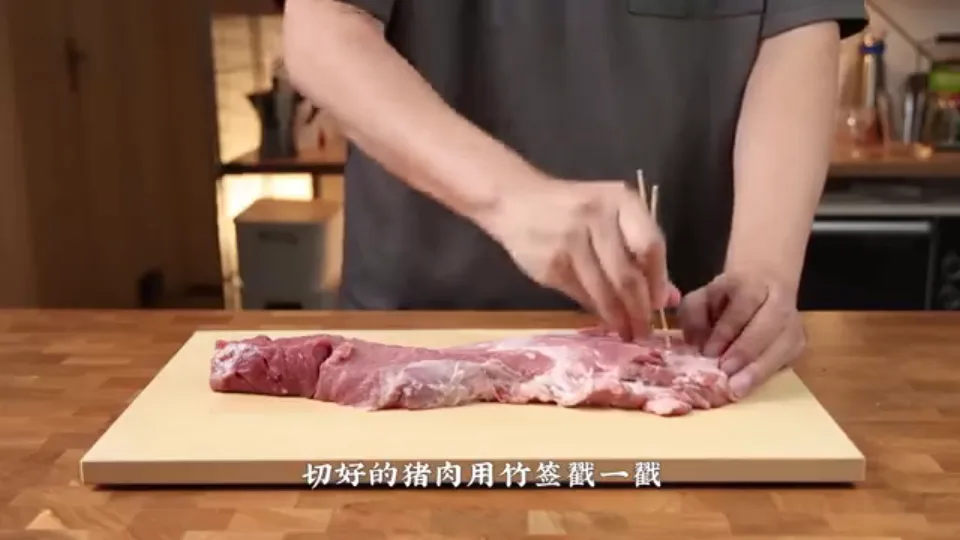
Cut the pork collar butt into strips about two to three fingers wide (slice skinless pork belly into even strips as well, or leave pork jowl whole). Rinse, pat completely dry with paper towels, and prick all over with bamboo skewers so the tenderizer and marinade penetrate deeply.
How to tellSurface is dry to the touch and evenly perforated on both sidesWatch at 1:00Tenderize the Pork with Blended Papaya Puree for 2 Hours
 Time 5 min
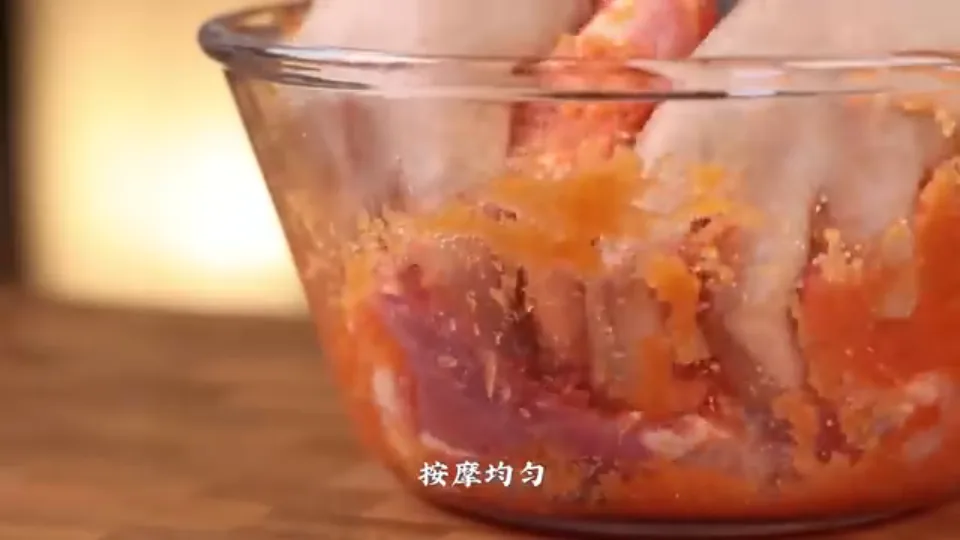
Blend 300 g peeled, seeded fresh papaya into a smooth puree, massage it evenly into the pork strips, and let rest for 2 hours—the natural enzymes soften muscle fibers while adding subtle fruit aroma. Alternatively, soak the pork in soda water or 2 g baking soda dissolved in 500 ml water.
How to tellEvery pork strip is evenly coated in bright orange-red papaya pureeWatch at 1:45Whisk Together the Homemade Char Siu Marinade
 Time 10 min
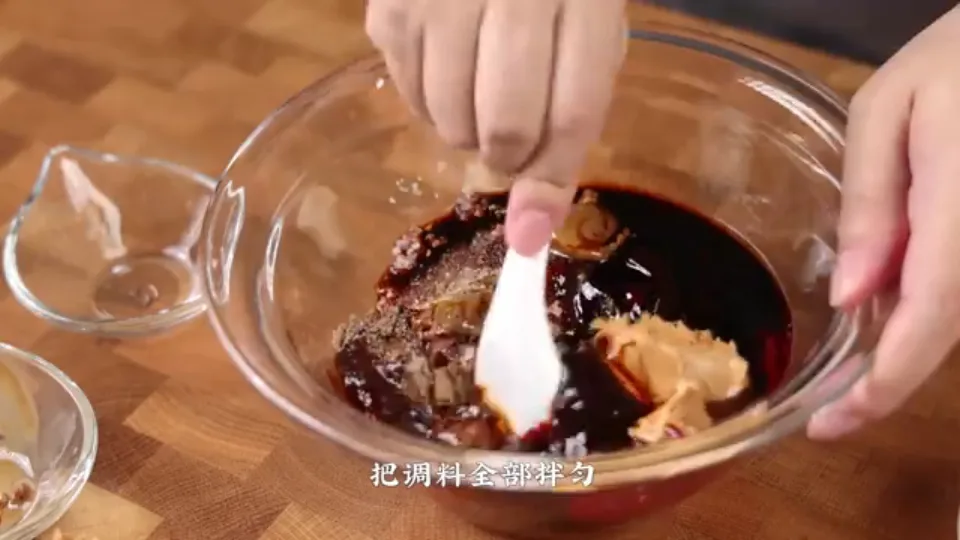
Mash 40 g red fermented bean curd with 20 g of its liquid, and finely mince 50 g garlic with 30 g shallots. Combine in a large bowl with 80 g raw cane sugar, 6 g chicken bouillon or MSG, 40 g mo shi sauce, 30 g hoisin sauce, 20 g peanut butter, 20 g sesame paste, 45 g light soy sauce, 5 g five-spice powder, and 30 g rose dew wine; stir until smooth, then taste and adjust.
How to tellAll pastes, sugar, and aromatics blend into a thick, glossy crimson sauceCommon mistakeBecause mo shi sauce already provides deep color and savory depth, do not add extra dark soy sauce unless substituting with yellow bean paste.Watch at 3:18Wipe Off Papaya, Coat with Marinade, and Chill Overnight
 Time 5 min
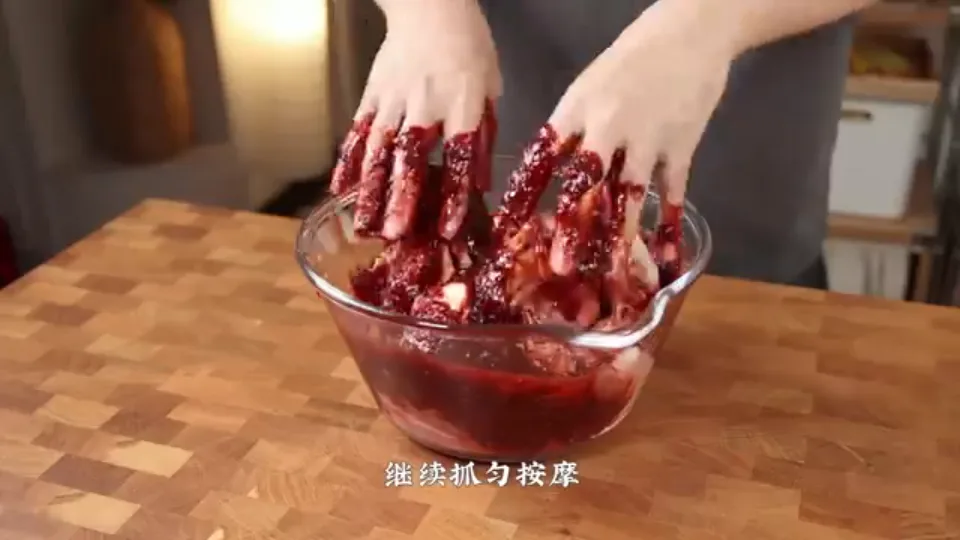
After 2 hours, wipe the papaya puree off the pork strips and transfer them to a clean bowl. Pour in all of the char siu marinade, massage thoroughly to coat every crevice, cover, and refrigerate overnight for 6 to 8 hours.
How to tellPork strips are thoroughly coated in rich crimson marinade with no papaya residue left behindWatch at 3:43Wipe Away Garlic Bits and Arrange Pork on a Wire Rack
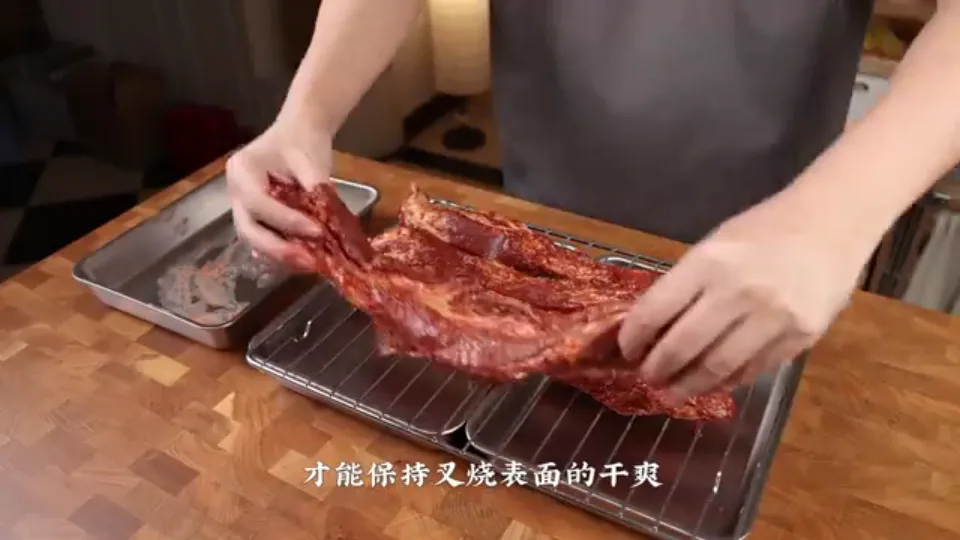 Time 5 min
Remove the marinated pork and wipe off the minced garlic and excess thick marinade so the aromatics do not scorch in the oven. Line a drip tray with aluminum foil for easy cleanup, set a wire rack on top, and lay the pork strips out evenly.
How to tellPork strips lie flat on the elevated wire rack with airflow underneathCommon mistakeNever line directly under the pork with parchment paper—moisture and fat must drip away into the pan below so the exterior dries and roasts cleanly.Watch at 4:04Roast at 200°C for 15 Minutes to Set the Pork
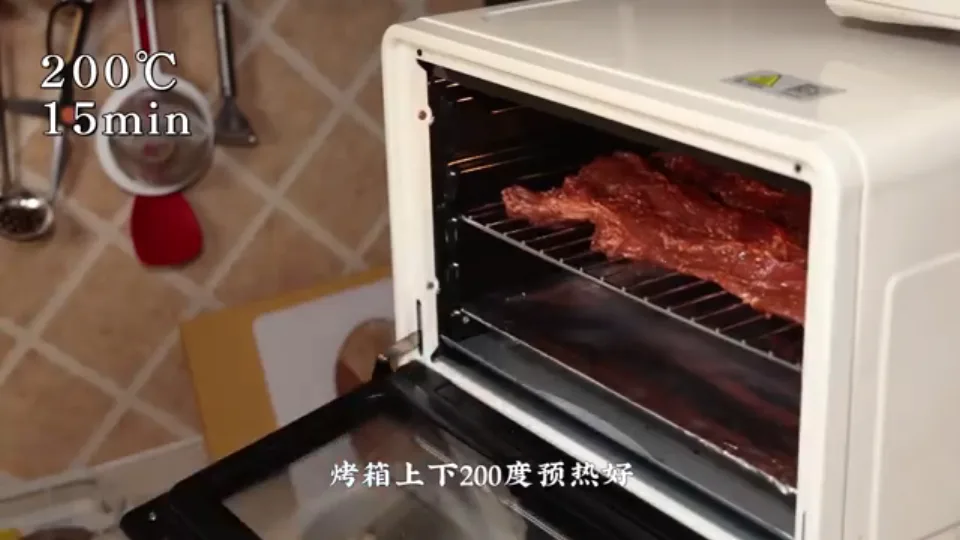 Time 15 minHeat Oven 200°C (top & bottom)
Preheat the oven to 200°C (top and bottom heat) and slide the wire rack and drip pan onto the middle shelf. Roast for 15 minutes first to firm up the strips and dry the surface before glazing.
How to tellEdges tighten, surface marinade darkens, and juices begin dripping belowWatch at 4:14Simmer Maltose, Water, and Rose Dew Wine into Glaze
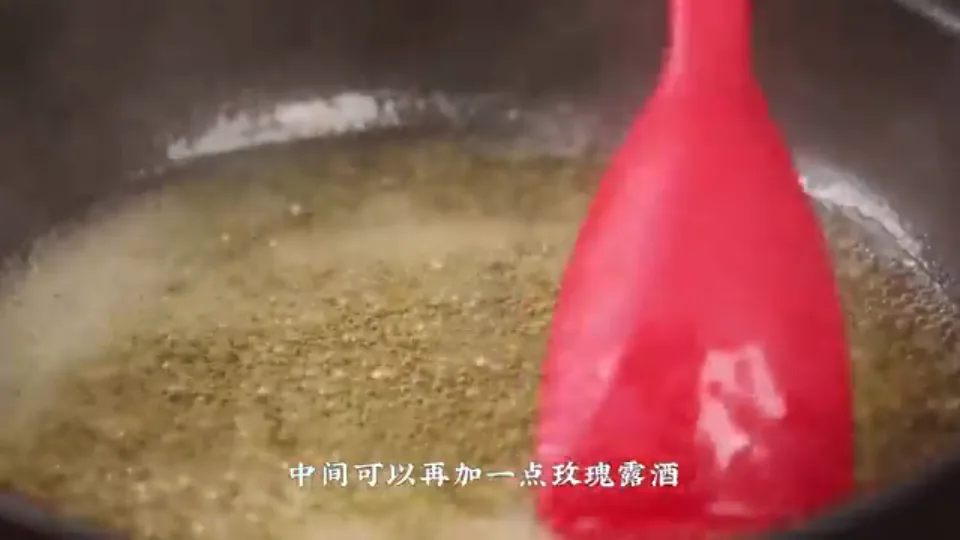 Time 5 minHeat Medium heat
While the pork bakes, combine 100 g maltose syrup and 100 ml water in a small skillet over medium heat, stirring until dissolved and bubbling with fine foam. Stir in 20 g rose dew wine mid-simmer to add floral complexity and keep the glaze from tasting overly sweet, and cook until slightly thickened.
How to tellSyrup bubbles with small tight foam, turning clear golden and lightly viscousCommon mistakeDo not swap maltose for white granulated sugar, which lacks the golden gloss and can taste cloying.Watch at 4:55Brush Glaze on Both Sides and Roast 10 Minutes More at 200°C
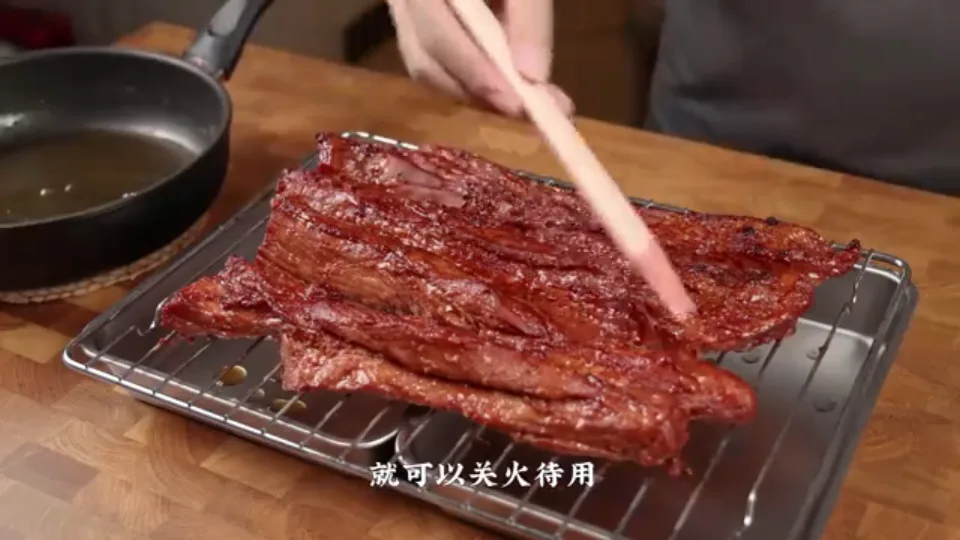 Time 10 minHeat Oven 200°C (top & bottom)
Pull the tray out after 15 minutes, brush the warm maltose glaze evenly across the top, flip every strip, and brush the second side thoroughly. Return to the 200°C oven and roast for another 10 minutes.
How to tellBoth sides glisten with an even coat of maltose glaze and deepen to bright mahoganyWatch at 5:04Glaze Again and Roast at 230°C for 10 Minutes to Caramelize
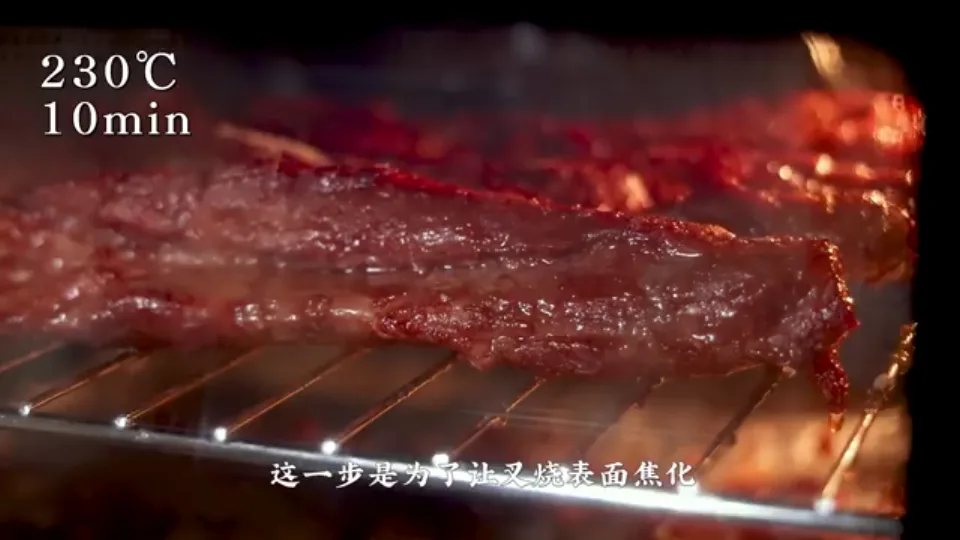 Time 10 minHeat Oven 230°C (top & bottom)
Remove the pork again, flip, and brush with a second coat of maltose glaze. Raise the oven temperature to 230°C, let it preheat, and roast for a final 10 minutes to blister and caramelize the edges (about 35 minutes total; reduce time for smaller batches or thinner pork jowl, and optionally kiss pale spots with a kitchen torch).
How to tellSurface turns deeply lacquered and glossy with charred caramelized edgesWatch at 5:22Rest Briefly, Slice, and Serve Hot
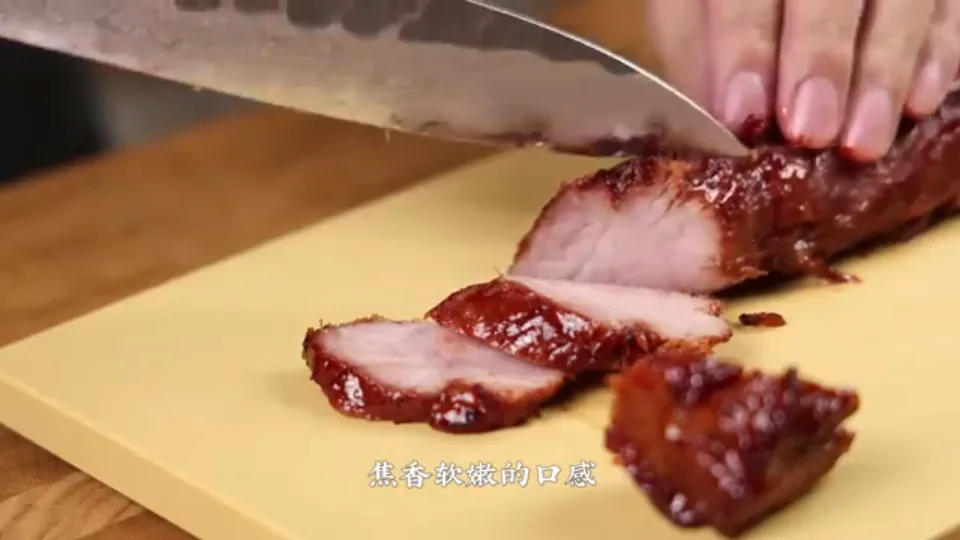 Time 5 min
Transfer the roasted char siu from the rack and let rest briefly so the glaze sets and juices settle, then slice cleanly (use a wide diagonal angle if slicing pork jowl). Serve on its own or over steamed rice with blanched greens, a fried egg, and toasted sesame seeds.
How to tellCross-section is juicy and tender inside with a vibrant lacquered red rimWatch at 6:07
Chef's secrets
Papaya Enzyme Tenderizing (Plus Baking Soda Fallback)
Tenderizing pork for 2 hours in 300 g fresh papaya puree breaks down tough muscle fibers naturally while imparting subtle fruitiness. Always wipe the puree clean before adding the char siu marinade so it doesn't dilute the sauce or scorch. If papaya isn't handy, soaking in soda water or 2 g baking soda dissolved in 500 ml water gives a similar tenderizing effect.
Balancing the 6 Flavor Axes & Why Mo Shi Sauce Matters
Martin frames great char siu sauce across six dimensions: aroma, umami, saltiness, gloss, color, and sweetness. Red fermented bean curd gives signature red hue, 80 g raw cane sugar balances the salty pastes, mo shi and hoisin pile on umami, peanut butter and sesame paste add nutty richness, and rose dew wine lifts the aroma. Because mo shi sauce already brings deep color, skip dark soy sauce unless substituting with 40 g yellow soybean paste plus 5 g dark soy.
Wiping Off Garlic & Roasting Naked on a Wire Rack
Once the garlic and shallots have infused the pork overnight, wipe them off the surface before roasting or they will burn bitter at 200–230°C. Likewise, never put parchment paper under the meat on the rack—dripping water and fat must fall cleanly into the foil-lined tray below so the surface stays dry enough to caramelize and hold the glaze.
Why 'Honey Glaze' Is Actually Maltose & Two-Stage Heat
In Cantonese, 'maltose' and 'honey' share the same pronunciation—hence traditional honey glaze is actually maltose simmered with water and rose dew wine for bright golden shine without cloying sweetness. Pair that with two-stage heat: bake at 200°C first to cook through and set, glaze twice, then finish at 230°C for 10 minutes to char the edges without drying out the interior.
Variations
Fast Skillet Char Siu (No Oven, No Papaya Needed)
Ideal when you have no oven—the braising step keeps the meat tender so you can skip papaya or baking soda. After patting dry and pricking the pork, marinate 3 hours (or longer) in 70 g store-bought char siu sauce, 30 g minced garlic, 30 g light soy sauce, 20 g sugar, and 15 g rose dew wine. Wipe off the garlic and pan-sear in oil over medium heat for 3–5 minutes per side until browned. Whisk 200 ml water into the leftover marinade, strain out the garlic into the skillet, cover, and simmer on low for 15 minutes; uncover and boil on high until thick. Transfer the pork and reserve the pan sauce. Simmer 100 g maltose, 100 g water, and 20 g rose dew wine until syrupy, toss the pork through the glaze to coat, slice, and spoon the reserved sauce on top.
Air Fryer Char Siu (Compact & Quick)
Because air fryers tend to dry pork out, tenderize first with papaya puree or baking soda water and keep the pieces moderately sized. Marinate at least 3 hours in the quick blend (70 g store-bought char siu sauce, 30 g minced garlic, 30 g light soy sauce, 20 g sugar, 15 g rose dew wine). Wipe off the garlic, place in the air-fryer basket without parchment paper, and roast at 200°C for 10 minutes. Simmer 100 g maltose, 100 g water, and 20 g rose dew wine until sticky, toss the pork in the glaze, and air-fry at 200°C for 10 minutes; coat in the glaze once more and roast a final 10 minutes (add 3–5 minutes if extra char is needed depending on your fryer's wattage).
Choosing Your Cut: Collar Butt vs. Pork Belly vs. Pork Jowl
Use pork collar butt for classic tender, lean-with-marbling char siu; use skinless pork belly strips for rich, melt-in-the-mouth fatty char siu; or try snow-marbled pork jowl for a bouncy, crisp-tender bite. Pork jowl follows the same two-glaze method, but shorten the total bake time since the cut is thinner, and slice on a sharp diagonal for wide, attractive pieces.
FAQ
What if I don't have fresh papaya to tenderize the pork?
Soak the pricked pork for 2 hours in plain soda water, or dissolve 2 g of baking soda in 500 ml water instead. If you are making the skillet variation—which simmers the pork in water for 15 minutes—you can skip tenderizing with papaya or baking soda altogether.
Can I substitute mo shi sauce, peanut butter, or sesame paste in the marinade?
Yes. Swap 40 g mo shi sauce for 40 g yellow soybean paste plus 5 g dark soy sauce (do not add dark soy if you have mo shi sauce). You can also use 60 g blended fermented bean curd sauce instead of 40 g blocks + 20 g liquid, and use just peanut butter or just sesame paste if you only have one. For a shortcut, use 70 g store-bought char siu sauce with garlic, light soy, sugar, and rose dew wine.
Do I have to use maltose for the glaze, or can I use white sugar?
Martin advises against substituting white sugar. In Cantonese, 'maltose' and 'honey' are homophones, so authentic char siu 'honey glaze' is traditionally made with maltose syrup simmered with water and rose dew wine—it coats with a bright golden sheen and pleasant, non-cloying sweetness that white sugar cannot replicate.
Why should I roast on a wire rack without parchment paper underneath the pork?
Pork releases substantial moisture and rendered fat during roasting. If it sits directly on parchment paper or a flat pan, the underside steams in pooled liquid instead of drying out. Elevating the strips on a wire rack over a foil-lined drip pan allows juices to fall away so heat circulates all around for crisp caramelization.
How should I adjust the marinade and bake time if I make a smaller batch?
The full homemade marinade scales to 1.5–2 kg (3–4 jin) of pork—simply scale the marinade down proportionally for smaller cuts. Also shorten the total roasting time accordingly for smaller batches or thinner cuts like pork jowl, watching the surface closely during the final 230°C stage.
No time to cook?
The same wok-fired cooking, already made for you at Bryt Kitchen.
See the menu